

Caulking is defined as a building sealant applied to joints, gaps, and penetrations to control air leakage, moisture infiltration, and volatile organic compound (VOC) emissions within a structure. Understanding how caulking affects environmental compliance matters because the wrong product, applied incorrectly, can disqualify a building from LEED or BREEAM certification, trigger indoor air quality violations, and generate unnecessary material waste. Compliance officers and property managers working toward green building targets need to treat sealant selection as a regulatory decision, not just a maintenance task.
How do low-VOC caulking products support compliance with environmental regulations?
VOC content is the most direct way caulking intersects with environmental regulation. Green building certifications such as LEED cap sealant VOC limits at 250 g/L, with many high-performance products achieving below 50 g/L. That gap between the ceiling and what top products actually emit is significant. It means specifying a compliant product is achievable, but only if you verify the numbers rather than trust the label.
Third-party testing is the standard that separates verified compliance from marketing claims. EPA Method 24 and ISO 16000 are the accepted testing protocols for confirming VOC emissions in sealants. A product can carry a “low-VOC” label and still fail these tests. Requesting the actual test report, not just the product data sheet, is the only reliable way to confirm compliance.
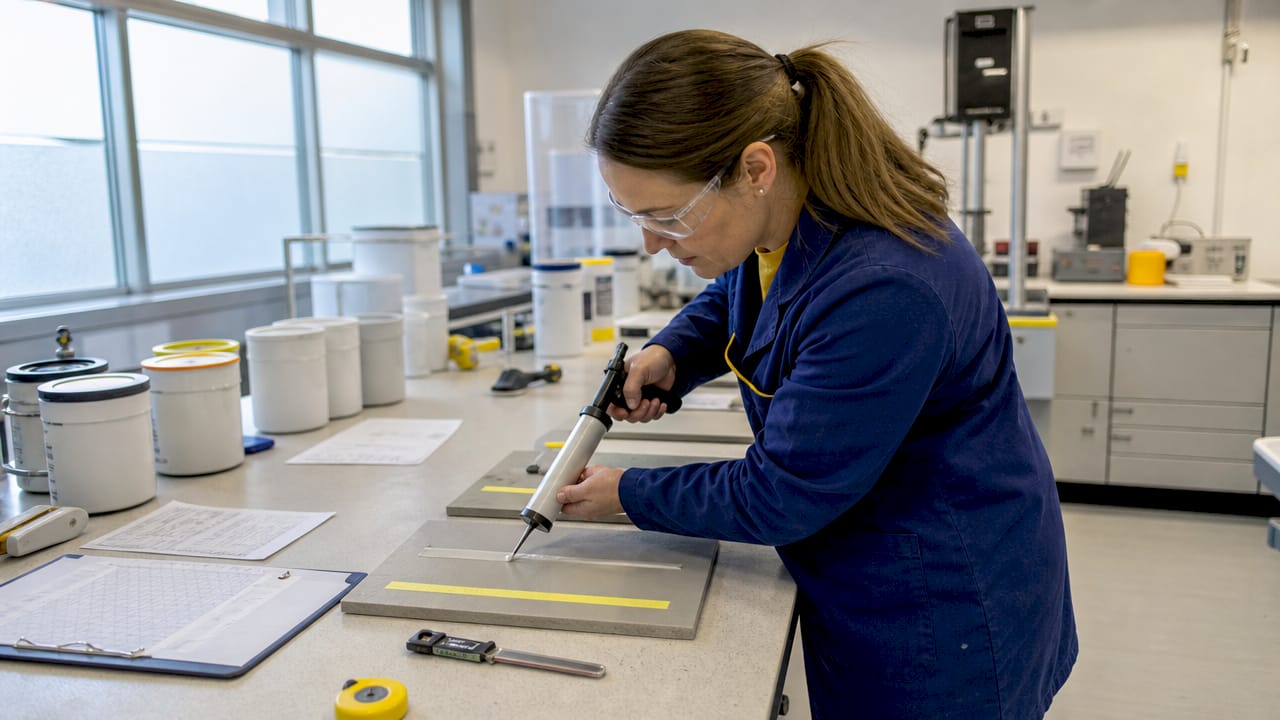
The choice between acetic-cure and neutral-cure silicone sealants also affects indoor air quality in ways that VOC numbers alone do not capture. Neutral-cure silicone sealants generally emit fewer odours and no corrosive acids during curing, making them the preferred option for occupied buildings, healthcare facilities, and schools. Acetic-cure variants can release acidic off-gassing during cure, which causes complaints and may trigger indoor air quality investigations even when VOC content is technically within limits.
| Sealant type | VOC profile | Best application |
|---|---|---|
| Acetic-cure silicone | Low VOC but acidic off-gassing during cure | Exterior, unoccupied spaces |
| Neutral-cure silicone | Low VOC, minimal odour | Occupied interiors, sensitive environments |
| MS polymer | Very low VOC, paintable | Interior and exterior, mixed substrates |
| Butyl sealant | Low VOC, long service life | Glazing, roofing, high-movement joints |
Pro Tip: Always request chamber emissions test data (ISO 16000 series) from your sealant supplier before specifying a product for occupied spaces. A product data sheet is not a substitute for a verified emissions report.
What role does caulking durability and application play in environmental sustainability?
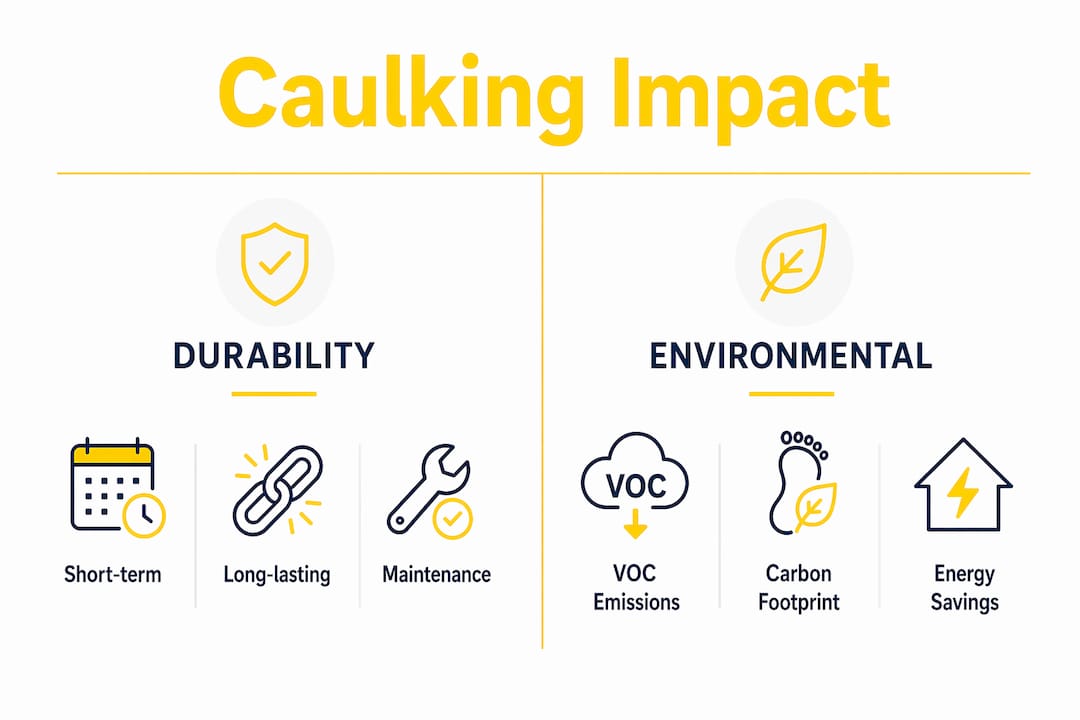
A sealant that fails in three years creates more environmental impact than one that lasts twenty-five. Premature sealant failure results in waste, energy-intensive repairs, and renewed air leakage that undermines a building’s energy performance. Durability is not a secondary consideration. It is central to the caulking environmental impact calculation.
Correct application conditions are non-negotiable for achieving that durability. The US Department of Energy specifies that caulk must be applied at temperatures above 7.2°C and in low-humidity conditions to achieve proper adhesion. Applying sealant in cold or damp conditions is one of the most common causes of early failure on Canadian properties, particularly during shoulder seasons when contractors push to finish exterior work before winter.
Common application failures that compromise both performance and compliance:
- Applying caulk over dirty, wet, or oily substrates, which prevents adhesion
- Using the wrong sealant type for joint movement, causing tearing within the first freeze-thaw cycle
- Skipping backer rod in wide joints, leading to three-sided adhesion and premature cracking
- Applying in temperatures below 7.2°C, which prevents proper cure and reduces service life
- Over-tooling or under-tooling the bead, which affects surface contact and long-term seal integrity
Butyl sealants carry a higher carbon footprint during manufacturing, but lifecycle energy savings over 20–30 years offset that initial impact. This is a critical point for compliance officers evaluating products on a full lifecycle basis rather than just upfront emissions. A product that performs for three decades without replacement is environmentally superior to a lower-footprint product replaced every five years.
Pro Tip: For exterior joints on Ontario buildings, schedule caulking work between late may and early october. That window gives you the temperature and humidity conditions needed for reliable adhesion and long-term performance.
How does caulking influence building certifications and compliance frameworks?
Sealant choices connect directly to credits in LEED, BREEAM, and similar programmes. Building airtightness and Indoor Environmental Quality credits both depend on sealant performance and emissions data. Getting those credits requires documentation, not just good intentions.
The four documentation steps compliance officers need to follow:
- Confirm VOC content against the applicable threshold. LEED uses SCAQMD Rule 1168 as its reference standard. Your sealant’s VOC content must be verified against that specific limit, not a generic “low-VOC” claim.
- Request third-party emissions test reports. Manufacturers must supply detailed VOC content data, chamber emissions testing results, and supporting documentation. If a supplier cannot provide these, the product is not suitable for a certified project.
- Document material durability and movement capacity. Materials and Resources credits in LEED reward products that reduce waste over the building lifecycle. Specifying a sealant with a verified 20-plus-year service life supports this credit pathway.
- Maintain a product substitution log. If a specified sealant is substituted on site without approval, the substituted product may not meet the original compliance criteria. A substitution log protects the project’s certification status.
Environmental compliance for sealants has evolved into a core sustainability concern, with material transparency now required for both Indoor Environmental Quality and Materials and Resources credits. The days of submitting a product data sheet and calling it done are over. Certification bodies now expect chamber test data, manufacturer declarations, and evidence of proper application.
What are eco-friendly caulking options and their environmental trade-offs?
No single sealant type is the right answer for every building, climate, or regulatory context. The most practical eco-friendly caulking options for Canadian properties are MS polymers, neutral-cure silicones, and butyl sealants. Each has genuine strengths and real limitations.
| Sealant type | Environmental strength | Key limitation | Best fit |
|---|---|---|---|
| MS polymer | Very low VOC, paintable, solvent-free | Higher unit cost than standard silicone | Interior and exterior mixed-substrate joints |
| Neutral-cure silicone | Low emissions, 20-plus-year service life | Not paintable, difficult to remove | Glazing, curtain walls, exterior façades |
| Butyl sealant | Exceptional durability, low VOC in use | Higher manufacturing carbon footprint | Roofing, glazing, high-movement joints |
| Acrylic latex | Low cost, paintable, low VOC | Limited movement capacity, shorter lifespan | Interior trim, low-movement gaps |
MS polymers represent the clearest advance in sustainable sealant chemistry over the past decade. They cure without solvents, accept paint, and bond to most substrates without a primer. For compliance officers specifying products for LEED projects, MS polymers frequently meet VOC thresholds without requiring additional documentation effort.
Recycling and disposal remain unresolved challenges across all sealant categories. Cured silicone and butyl sealants cannot be recycled through standard municipal programmes. The environmental cost of disposal is real, which reinforces the case for specifying products with the longest possible service life. A sealant that lasts 25 years generates one disposal event. One replaced every five years generates five. Lifecycle durability is the most underrated factor in the caulking sustainability equation.
Selecting the right product also depends on the environmental impact of your caulking choices relative to your building type and local climate. Ontario’s freeze-thaw cycles demand sealants with high movement capacity. A product that performs well in a temperate climate may crack and fail within two winters here.
Key takeaways
Caulking directly affects environmental compliance through VOC emissions, building airtightness, sealant durability, and the documentation required to support LEED and BREEAM certification credits.
| Point | Details |
|---|---|
| VOC verification is mandatory | Request EPA Method 24 or ISO 16000 test reports, not just product data sheets. |
| Neutral-cure silicone suits occupied spaces | It emits fewer odours and no corrosive acids compared to acetic-cure variants. |
| Durability reduces environmental impact | A 25-year sealant generates far less waste and energy cost than repeated short-term replacements. |
| Application conditions determine performance | Caulk applied below 7.2°C or in high humidity fails early and undermines compliance. |
| Documentation supports certification credits | LEED and BREEAM require chamber emissions data, substitution logs, and manufacturer declarations. |
What I’ve learned after 25 years of watching “compliant” sealants fail
The compliance conversation almost always starts in the wrong place. Property managers and compliance officers focus on the product label, and I understand why. Labels are easy to read and easy to file. The problem is that a label is a marketing document, not a performance guarantee.
I have seen neutral-cure silicone specified correctly, purchased correctly, and then applied in october when the temperature dropped to 4°C overnight. The sealant cured poorly, lost adhesion within one winter, and the building failed its next air leakage test. The product was compliant. The application was not. That distinction matters enormously.
The other pattern I keep seeing is greenwashing at the procurement stage. A contractor submits a product with a “low-VOC” stamp, the compliance officer files it, and nobody requests the actual emissions test report. Verified third-party data is the only thing that separates genuine compliance from paperwork that looks right until an auditor asks a harder question.
My honest advice: treat sealant specification the same way you treat structural material specification. Require test reports. Confirm application conditions are met before work starts. Inspect the finished joint before signing off. The passive house standards community figured this out years ago. The rest of the building industry is catching up.
— Felix
Kettlecontracting resources for compliant caulking projects
Selecting the right sealant is only part of the compliance picture. Proper surface preparation and application technique determine whether a compliant product actually performs as specified.
Kettlecontracting has put together a detailed window preparation guide that walks through the surface conditions, cleaning steps, and timing requirements that give any sealant its best chance of lasting. For property managers tracking long-term performance, the guide on long-lasting caulk science covers the material and application factors that separate a 5-year seal from a 25-year one. Both resources are built around the same principle: doing it right the first time costs less than fixing it twice.
FAQ
What VOC limit applies to sealants under LEED?
LEED references SCAQMD Rule 1168, which caps sealant VOC content at 250 g/L. High-performance products routinely achieve below 50 g/L.
Is neutral-cure silicone always better than acetic-cure for compliance?
Neutral-cure silicone is the better choice for occupied or sensitive indoor spaces because it does not emit corrosive acids during curing. Acetic-cure variants are acceptable for exterior or unoccupied applications.
What test reports should I request from a sealant supplier?
Request EPA Method 24 results for VOC content and ISO 16000 series chamber emissions test data. A product data sheet alone is not sufficient for certification compliance.
Do butyl sealants qualify as eco-friendly caulking options?
Butyl sealants have a higher manufacturing carbon footprint but deliver 20–30 years of energy savings in service. On a full lifecycle basis, they are environmentally competitive with lower-footprint alternatives.
How does caulking application affect a building’s LEED certification?
Poor application causes early sealant failure, which reduces airtightness and can void Indoor Environmental Quality credits. Correct temperature, humidity, and substrate preparation are required to maintain the performance that certification credits assume.