

The single rule that decides every caulking choice is substrate compatibility. Match the chemistry to the surface first, and brand becomes secondary. Here are the top caulk products for the most common renovation tasks in Canada:
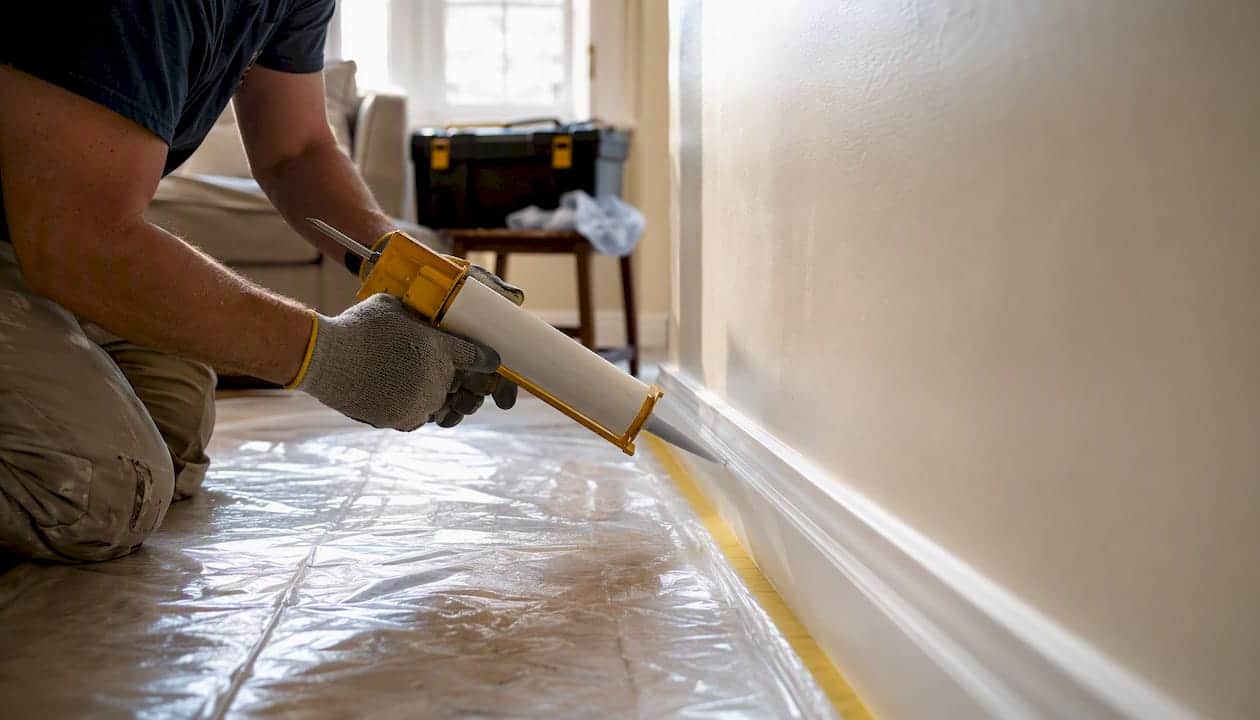
- DAP Alex Plus (siliconized acrylic) — best for interior trim, baseboards, and painted surfaces
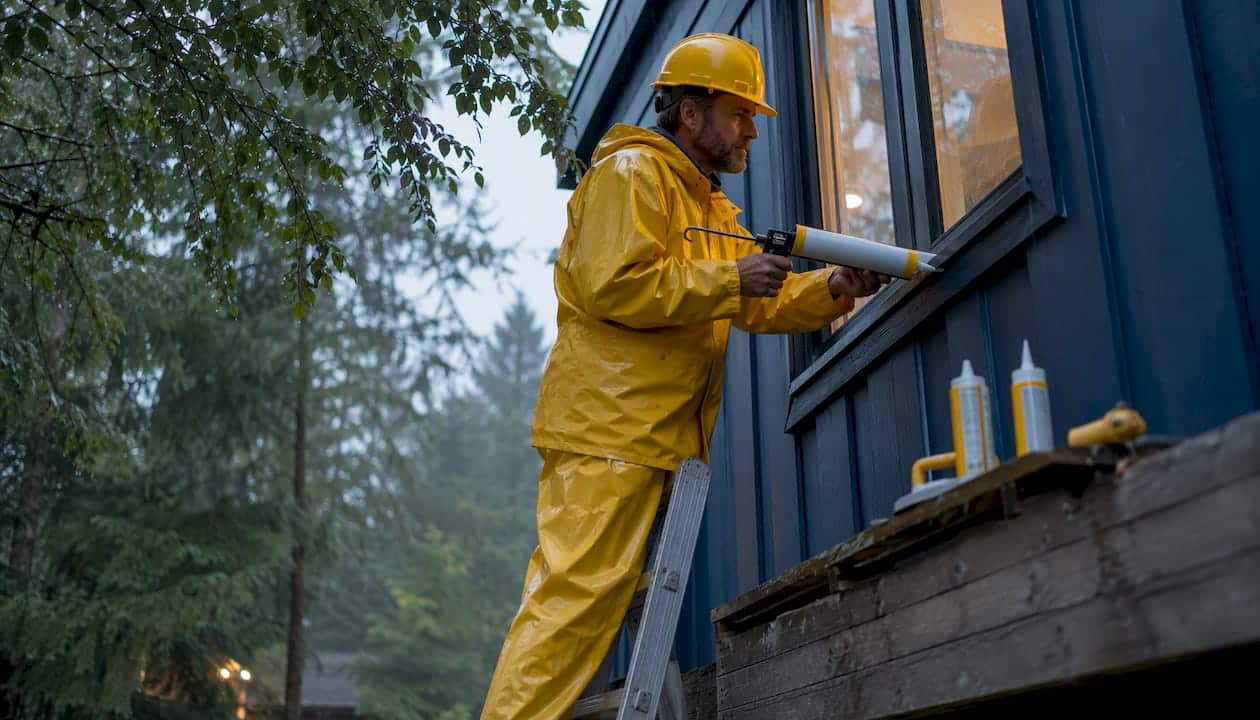
- DAP Dynaflex 230 — best for exterior window and door perimeters where paintability matters
- GE Silicone II — best for bathrooms, glass, and non-porous surfaces that need long-term waterproofing
- Sashco Big Stretch — best for high-movement joints, wood siding, and mixed-substrate transitions
- Gorilla 100% Silicone Sealant — best for glass, metal, and vinyl where a paintable finish is not required
- OSI QUAD Max — best for exterior masonry, brick, and multi-substrate perimeters
Table of Contents
- Which caulk products hold up best for renovations?
- What type of caulk should you use for each renovation task?
- How do you choose the right caulk for your renovation?
- How to apply caulk and get a clean, paintable finish
- Ontario Building Code, freeze–thaw realities, and contractor advice
- Key takeaways
- What 25 years on the job actually teaches you about caulking
- When professional caulking saves you from a costly redo
- Useful sources and further reading
- FAQ
Which caulk products hold up best for renovations?
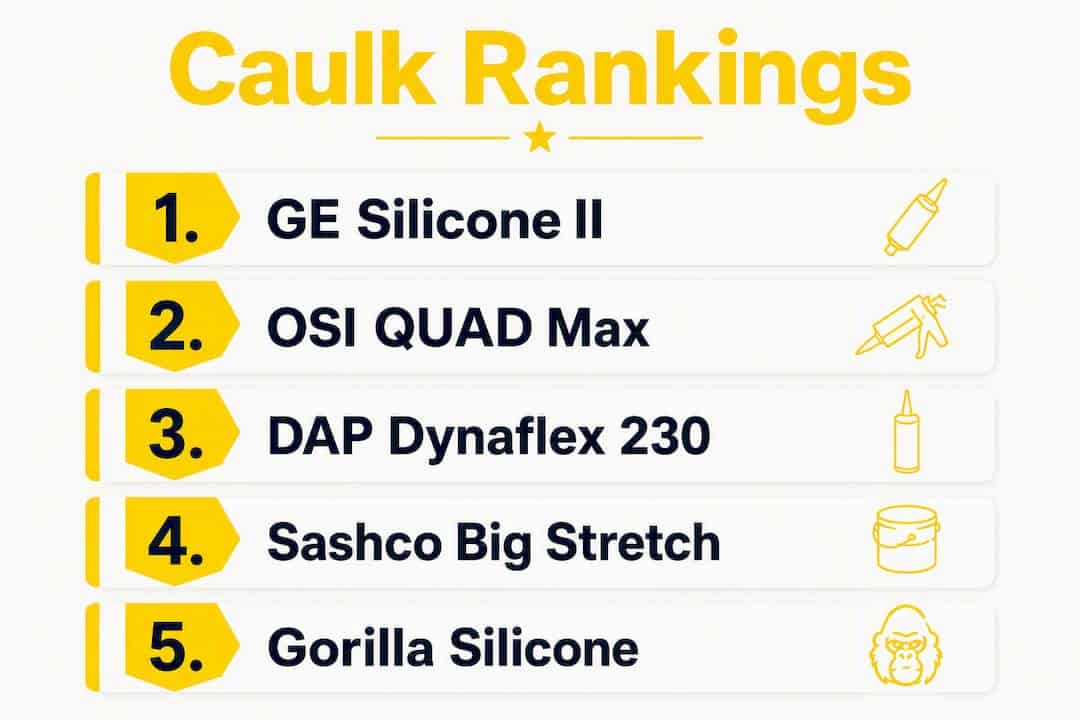
Ranked by real-world performance across adhesion, elasticity, paintability, and freeze–thaw durability. Products were evaluated against these four criteria because they reflect what actually fails on Canadian renovation sites: a sealant that cracks in January, peels off vinyl, or turns grey under paint is a rework job waiting to happen.
DAP Alex Plus All-Purpose Caulk
A siliconized acrylic formula that paints immediately after application and cleans up with water. It bonds well to wood, drywall, and painted surfaces, making it the go-to for interior trim, crown moulding, and baseboards. Not suited for wet areas or exterior joints exposed to standing water. Available at Home Depot, Canadian Tire, and Rona across Canada.
DAP Dynaflex 230
One of the most widely used exterior sealants for residential windows and doors in Ontario. It is siliconized latex, which means it handles weather movement, accepts paint after cure, and cleans up with water. For most Ontario exterior window and door perimeters, siliconized latex offers the best balance of paintability and weather resistance for homeowners. Available at major Canadian hardware retailers.
GE Silicone II
A 100% silicone sealant with strong mould resistance and a long service life on non-porous joints. It bonds to glass, ceramic tile, porcelain, and metal without primer. The trade-off: it is not paintable, and once cured, it cannot be overcoated with another sealant chemistry without full removal. Best used in bathrooms, around tubs, and on glass-to-frame joints.
Sashco Big Stretch
An acrylic-based elastomeric sealant with exceptional elongation, designed for joints that move significantly with seasonal temperature swings. It paints well and adheres to wood, vinyl, and composite siding. A strong choice for older homes with wood siding where gaps open and close through Ontario winters. Widely available at specialty building supply stores and online in Canada.
Gorilla 100% Silicone Sealant
A reliable 100% silicone option for non-porous substrates: glass, metal, and vinyl. It is waterproof, UV-resistant, and handles freeze–thaw cycling well. Like all pure silicones, it is not paintable and requires mineral spirits for cleanup. Available at Canadian Tire and Home Depot.
OSI QUAD Max
A hybrid polymer sealant that bonds to virtually any substrate without primer, including brick, concrete, vinyl, aluminium, and wood. It is paintable, UV-stable, and rated for exterior use in Canadian climate conditions. For mixed-substrate perimeters on older homes or commercial buildings, this is the product that avoids the “wrong chemistry” failure most DIYers run into. Available through specialty suppliers and some Home Depot locations.
Comparison table
| Attribute | DAP Alex Plus | DAP Dynaflex 230 | GE Silicone II | Sashco Big Stretch | Gorilla 100% Silicone | OSI QUAD Max |
|---|---|---|---|---|---|---|
| Best for | Interior trim/paint | Exterior windows/doors | Bathroom/glass | High-movement wood joints | Glass/metal/vinyl | Masonry/mixed substrates |
| Substrate compatibility | Wood, drywall, plaster | Wood, vinyl, aluminium | Glass, ceramic, metal | Wood, vinyl, composite | Glass, metal, vinyl | Brick, concrete, wood, vinyl, aluminium |
| Movement/elongation | Low–moderate | Moderate | Moderate–high | High | Moderate–high | High |
| Paintable | Yes (immediately) | Yes (after cure) | No | Yes (after cure) | No | Yes (after cure) |
| Mould resistance | Moderate | Moderate | Excellent | Moderate | Excellent | Good |
| Freeze–thaw durability | Interior use | Good | Excellent | Excellent | Excellent | Excellent |
| Ease of use & cleanup | Easy / water | Easy / water | Moderate / mineral spirits | Easy / water | Moderate / mineral spirits | Easy / water |
| Price/pack notes | Budget-friendly | Mid-range | Mid-range | Mid-to-premium | Mid-range | Premium |
| Available in Canada | Home Depot, Canadian Tire, Rona | Home Depot, Canadian Tire, Rona | Home Depot, Canadian Tire | Specialty suppliers, online | Canadian Tire, Home Depot | Specialty suppliers, Home Depot |
What type of caulk should you use for each renovation task?
Sealant types each have a distinct chemistry, and that chemistry determines where they work and where they fail. Here is a plain-language breakdown:
100% silicone bonds to non-porous surfaces: glass, glazed tile, metal, and vinyl. It stays flexible for decades and resists mould, but it will not accept paint and cannot be overcoated. Use it in bathrooms, on glass-to-frame joints, and anywhere water exposure is constant.
Polyurethane soaks into porous surfaces like brick, concrete, and wood, creating a mechanical bond that silicone cannot achieve. It is paintable after full cure and lasts 5–15 years depending on UV exposure. Use it on masonry joints, concrete foundations, and exterior wood-to-masonry transitions.
Acrylic/latex (painter’s caulk) is the easiest to use and the most paintable, but it has the shortest outdoor lifespan: roughly 3–5 years in Canadian conditions. Reserve it for interior gaps, trim, and baseboards where movement is minimal.
Siliconized acrylic adds silicone to the acrylic base for better adhesion and flexibility while keeping the paintability. DAP Alex Plus and DAP Dynaflex 230 are both siliconized acrylic options, commonly used for exterior window and door perimeters in Ontario due to their balance of paintability and weather resistance for homeowners.
Hybrid MS-polymer sealants (like OSI QUAD Max) combine polyurethane toughness with silicone flexibility. They bond to almost any substrate, accept paint, and resist UV well. Higher cost, but they eliminate the guesswork on mixed-substrate jobs.
Butyl rubber is used mainly for metal flashing, gutters, and roofing laps. It stays tacky, handles extreme weather, and bonds well to metal, but it is messy to work with and not suitable for finished interior surfaces.
Foam sealants (polyurethane foam) fill large gaps and cavities for air sealing but are not a substitute for caulk at finished joints. Use foam behind window frames before trimming, not as a surface sealant.
| Renovation task | Recommended type |
|---|---|
| Interior trim, baseboards, crown moulding | Acrylic/latex or siliconized acrylic |
| Bathroom tub surround, shower | 100% silicone |
| Exterior window/door perimeter | Siliconized latex or hybrid |
| Brick/concrete masonry joints | Polyurethane or hybrid |
| Metal flashing, gutters | Butyl rubber |
| Large gap air sealing (behind frames) | Polyurethane foam |
How do you choose the right caulk for your renovation?
Start with the substrate, not the brand. A sealant that bonds to glass will not bond to brick, and vice versa. Substrate compatibility is the single most important decision homeowners overlook. Once you know your surface, the shortlist writes itself.
After substrate, work through these selectors in order:
- Movement class: Joints around windows and doors move with every temperature swing. Choose a sealant rated for ±25% movement or higher (check the ASTM C920 rating on the technical data sheet) for any exterior joint.
- Paintability: If the joint will be painted, rule out 100% silicone. Siliconized acrylic and hybrid sealants accept paint after cure; pure silicone does not.
- Mould resistance: Bathrooms and wet areas need a sealant with a built-in mildewcide. Most 100% silicone and some hybrid products include it; standard acrylic does not.
- UV and freeze–thaw durability: For exterior joints in Ontario, choose a product rated for UV exposure and freeze–thaw cycling. Silicone lasts 20+ years; polyurethane 5–15 years; acrylic 3–5 years outdoors.
- VOCs and safe handling: Many sealants contain solvents. Work in ventilated spaces, wear gloves, and check the product’s Safety Data Sheet for specific handling requirements.
- Primer requirement: Masonry often needs a primer such as Sika Primer-3 N before polyurethane application. Skipping it can cause the joint to fail within a few seasons even when the chemistry is correct.
Red flags to avoid:
- Applying over a damp or cold substrate (the most common cause of early adhesion failure)
- Layering one chemistry over another — cured silicone prevents adhesion of any later sealant and forces full removal
- Choosing solely on price without checking the technical data sheet
- Caulking over common mistakes like old, incompatible sealant that was never removed
A higher upfront cost on a hybrid or polyurethane product often saves a full rework within two to three years. That is the real cost calculation.
Pro Tip: Before buying, pull up the product’s technical data sheet online and confirm it lists ASTM C920 compliance and a movement class that matches your joint width and expected movement. Hardware-store shelf tags rarely tell you this.
How to apply caulk and get a clean, paintable finish
Good product choice means nothing if the application is wrong. Surface prep and timing cause more failures than product quality on most residential jobs.
Step-by-step application
- Remove old sealant completely. Use a utility knife, oscillating tool, or caulk remover tool. Any remaining incompatible sealant will prevent adhesion.
- Clean the substrate. Wipe with a clean cloth and an appropriate solvent (isopropyl alcohol for non-porous surfaces, a stiff brush and water for masonry). Let it dry fully.
- Check substrate temperature. The surface must be above 5°C and dry. Cold or damp masonry is the leading cause of adhesion failure on exterior jobs.
- Install backer rod for wide joints. For gaps wider than 12 mm, press closed-cell backer rod (conforming to ASTM C1330) into the joint before caulking. This controls joint depth and prevents three-sided adhesion.
- Cut the nozzle at a 45° angle to match the joint width. A smaller opening gives you more control.
- Apply in one steady pass. Keep the gun moving at a consistent speed. Overlap the bead slightly on both sides of the joint.
- Tool immediately. Use a wet finger, a caulking tool, or a plastic spoon to press the bead into the joint and smooth the surface. Do this within two to three minutes of application.
- Apply masking tape for clean lines on finished surfaces before applying the bead, then pull the tape while the sealant is still wet.
- Clean up. Water-based sealants clean up with water and a damp cloth. Silicone and polyurethane require mineral spirits before cure.
Pro Tip: For exterior masonry joints, check the seasonal timing guide before you start. Applying in October on a cold brick wall is a common reason joints fail by spring.
Paintability and recoat times
| Sealant type | Paintable? | Typical recoat time | Notes |
|---|---|---|---|
| Acrylic/latex | Yes | — | Paint as soon as skin forms |
| Siliconized acrylic | Yes | 1–2 hours | Wait for full skin; latex paint recommended |
| Polyurethane | Yes | — | Must be fully cured; oil or latex paint |
| Hybrid MS-polymer | Yes | — | Check TDS for specific product |
| 100% silicone | No | N/A | Cannot be painted; requires full removal to change |
Tool recommendations
For small jobs (1–2 gaps), a standard manual caulking gun works fine. Medium jobs covering multiple windows or a bathroom benefit from a dripless manual gun, which stops the bead when you release the trigger. Large exterior re-caulking projects, especially multi-unit or commercial properties, are faster and more consistent with a powered or pneumatic gun. Keep a bucket of warm water nearby for water-based sealants and have mineral spirits on hand for silicone cleanup.
Ontario Building Code, freeze–thaw realities, and contractor advice
The Ontario Building Code Article 9.28.1.5 requires exterior sealants to be non-hardening, weather-resistant, and compatible with the substrate. It references ASTM C834, C920, C1184, and C1311 as acceptable sealant standards. When you buy a product for an exterior renovation, pull up the technical data sheet and confirm it lists at least one of these ASTM ratings. If it does not, it likely does not meet OBC requirements for exterior use.
Freeze–thaw cycling is the real test for any sealant in Ontario. Masonry stays cold longer than air temperature suggests, and moisture trapped in pores prevents adhesion even when the thermometer reads above the product’s minimum application temperature. Professionals target May to early October for exterior masonry work in Ontario. Applying in late fall or early spring on a cold brick wall is one of the most common reasons joints fail before the first winter is out.
For masonry substrates, primer matters. A product like Sika Primer-3 N applied before polyurethane sealant creates the mechanical bond the sealant needs. Without it, the joint can look fine for a season and then delaminate.
Pro Tip: Inspect your exterior caulking twice a year, in spring and fall. Catching a cracked or shrinking joint before water gets behind it is far cheaper than dealing with the water damage after.
When to hire a professional:
- Mixed-substrate perimeters (e.g., brick-to-vinyl, concrete-to-aluminium) where chemistry selection is critical
- Structural or expansion joints where movement class must meet code
- High-risk water intrusion sites: below-grade walls, parapet caps, or anywhere a failed seal causes interior damage
- Any job where you need documented substrate temperatures and warranty-grade workmanship
Experienced contractors document substrate temperatures during warranty work and time exterior jobs to late spring and summer. That documentation protects both the homeowner and the contractor if a joint is questioned later.
Safety note: Always work in ventilated spaces when using solvent-based sealants, wear nitrile gloves, and review the product’s Safety Data Sheet before opening the tube. Polyurethane and silicone sealants can cause skin and respiratory irritation with prolonged exposure.
Key takeaways
Substrate compatibility is the single most important factor in choosing a renovation sealant; getting that right matters more than brand name or price.
| Point | Details |
|---|---|
| Match chemistry to substrate | Silicone for glass/vinyl/metal; polyurethane for masonry; siliconized acrylic for painted exterior trim. |
| Check ASTM ratings | Exterior sealants must meet OBC requirements; confirm ASTM C920 or C834 on the product’s technical data sheet. |
| Time exterior work correctly | Apply between May and early October in Ontario; cold or damp substrates cause adhesion failure regardless of product quality. |
| Never layer chemistries | Cured silicone prevents adhesion of any later sealant; remove it fully before resealing. |
| Kettlecontracting for complex jobs | Mixed-substrate perimeters, structural joints, and high-risk water intrusion sites are where professional caulking prevents costly rework. |
What 25 years on the job actually teaches you about caulking
The failure I see most often on renovation sites is not a bad product. It is the right product applied at the wrong time, on the wrong surface, over old sealant that was never removed. A homeowner buys a reputable tube, runs a bead over a cold October window frame, and by March the joint is lifting at the edges. They blame the caulk. The real problem was a substrate sitting at 3°C with moisture in the pores.
The other pattern I see constantly: silicone applied over a painted trim joint because “silicone is the best.” It is the best for glass and tile. On a painted wood trim joint that needs to be repainted in two years, it is the wrong call entirely. You cannot paint over it, and when it fails, you cannot seal over it either. The whole joint has to be scraped clean before anything new will stick.
What actually works is simple: identify the substrate, pick the chemistry that bonds to it, check the temperature before you start, and remove everything old before you apply anything new. That four-step process prevents about 80% of the callbacks I have seen over the years. The products on this list are all solid choices when used correctly. The correct use is the harder part.
For jobs where the substrate transitions are complex, where the joint is structural, or where a failed seal means water inside a wall, the cost of getting it wrong is much higher than the cost of hiring someone who does this every day. Kettlecontracting handles exactly those situations across the Greater Toronto Area, and we have seen enough failures to know which ones are preventable.
When professional caulking saves you from a costly redo
Picking up a tube at Canadian Tire and running a bead yourself is the right call for a simple interior trim gap or a single bathroom joint. For anything more involved, the math changes quickly.

Kettlecontracting handles the jobs where product selection, substrate prep, and application timing all have to be right the first time: mixed-substrate exterior perimeters, full building envelope re-caulking, expansion joints, and any site where water intrusion is a real risk. Serving residential and commercial properties across the Greater Toronto Area, the team brings the same approach to a single-family home as to a multi-unit building — correct chemistry, correct timing, documented workmanship.
If you are weighing whether your project is a DIY job or a professional one, the trade-specific work guide on the Kettlecontracting site lays out exactly where the line is. For a quote or to book an assessment, contact Kettlecontracting directly through the website.
Useful sources and further reading
The following resources were used to verify code requirements, product guidance, and application standards referenced in this article.
| Source | What it covers |
|---|---|
| OBC Article — CodeIndex | Ontario Building Code sealant requirements and ASTM standard references |
| Choosing the Right Caulk: Silicone vs. Polyurethane | Substrate-by-chemistry guidance, lifespan data, and seasonal application advice |
| Caulking and Sealants — Canadian Woodworking | Sealant type overview, cleanup solvents, and domestic application notes |
| Caulking Windows and Doors Guide — DD Home Services | Ontario homeowner guidance, common DIY mistakes, and inspection cadence |
| Natural Resources Canada — Keeping the Heat In | Air sealing and caulking in the context of Canadian home energy performance |
| DAP Canada — Caulks and Sealants Guide | Product-level guidance on DAP sealant lines and paintability differences |
Additional Kettlecontracting resources:
- Caulking season checklist for Ontario homes — timing and maintenance guidance for Ontario homeowners
- How caulking prevents water damage — preventive benefits and cost context
- Common caulking mistakes homeowners make — application errors and how to fix them
- Energy savings from window caulking — estimated savings from proper air sealing
This article provides general information for homeowners and DIY renovators. For code compliance on specific projects, confirm requirements with your local building authority or a qualified contractor.
FAQ
What is the highest-rated caulk for renovation projects?
For most Canadian renovation tasks, GE Silicone II and OSI QUAD Max consistently rank at the top: GE Silicone II for wet areas and non-porous surfaces, and OSI QUAD Max for exterior mixed-substrate joints where primer-free adhesion and UV stability matter most.
What caulk is best for painting over?
DAP Alex Plus and DAP Dynaflex 230 are the strongest choices when paintability is a requirement. Both are siliconized acrylic formulas that accept latex paint after cure, and DAP Alex Plus can be painted almost immediately after application on interior trim.
What is better than caulking for sealing large gaps?
For gaps wider than about 12 mm, closed-cell backer rod combined with an appropriate sealant gives a better result than caulk alone. For large cavities behind window frames or between structural members, a polyurethane foam sealant fills the void before the surface joint is caulked.
What caulk works best for wood renovation projects?
Sashco Big Stretch is the standout choice for wood joints that move seasonally, such as wood siding, trim, and older window frames. For interior wood trim and baseboards that will be painted, DAP Alex Plus is the practical, budget-friendly option.