
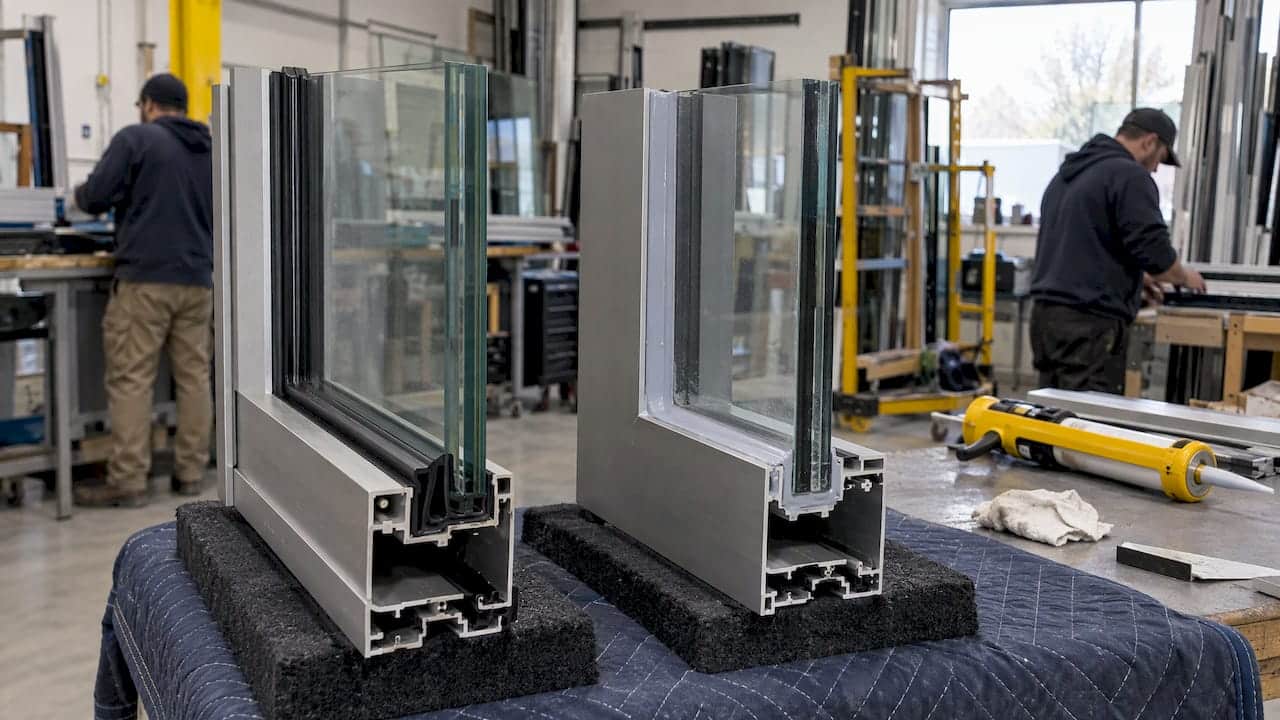
Wet glazing seals glass into its frame with a gun-applied sealant. Gasket glazing, also called dry glazing, holds it with a pre-formed rubber or vinyl strip under compression. Gaskets are quicker to install from inside and easier to swap out. Wet glazing gives a continuous, bonded seal that is more resistant to water and air, but it depends on the quality of the workmanship and needs exterior access. For buildings that go through Ontario’s freeze-thaw cycles, the sealed joint is the part to watch either way, and it is the part we work on every day.
This guide is for homeowners, property managers, building owners and contractors who need to know what is holding the glass in their windows and storefronts, what wears out, and what to do about it.
TL;DR
- Wet glazing uses a sealant applied with a caulking gun to bond and seal glass to the frame. It forms an uninterrupted seal, but it needs exterior access and skilled application.
- Gasket (dry) glazing uses compressed rubber, vinyl or foam tape. It can be installed from the interior and usually costs less, but gaskets can shrink, roll into the pocket and let the glass shift.
- Many systems combine both: sealant outside for weatherproofing, a gasket inside as the second seal.
- Sealant joints are maintenance joints. Plan on at least an annual look, and expect a seal on a sunny south-facing wall to age faster than one on the north side.
- If you see failed seals, drafts, or fogged units, have a trained sealing professional assess the joint before anyone patches over it.
Table of Contents
- What each method actually is
- Gasket vs wet glazing at a glance
- Why the seal fails, and what Ontario weather does to it
- Which one fits your property
- A simple inspection routine
- Why you should not just caulk over it
- Our perspective
- What we do about it
- FAQ
- Sources
What each method actually is
Before comparing, it helps to be clear about what is going on at the edge of the glass. Glass itself does not leak. Water and air get in through the joint between the glass and the frame, so the method used to seal that joint decides how the window performs.
Wet glazing
Wet glazing means applying sealant from a cartridge or sausage pack with a professional caulking gun to make the waterproofing seal. One manufacturer’s glazing brochure explains that because glass is impervious to water, waterproofing depends on the glazing method and the installation, and that wet glazing produces an uninterrupted seal. In plain terms, the sealant fills the joint, bonds to both surfaces and leaves no gap for moisture to collect.
When the sealant is structural silicone, it also forms a crosslinked bond between glass and frame. If you want the detail on that product type, we cover it in our guide to structural glazing sealant.
Gasket (dry) glazing
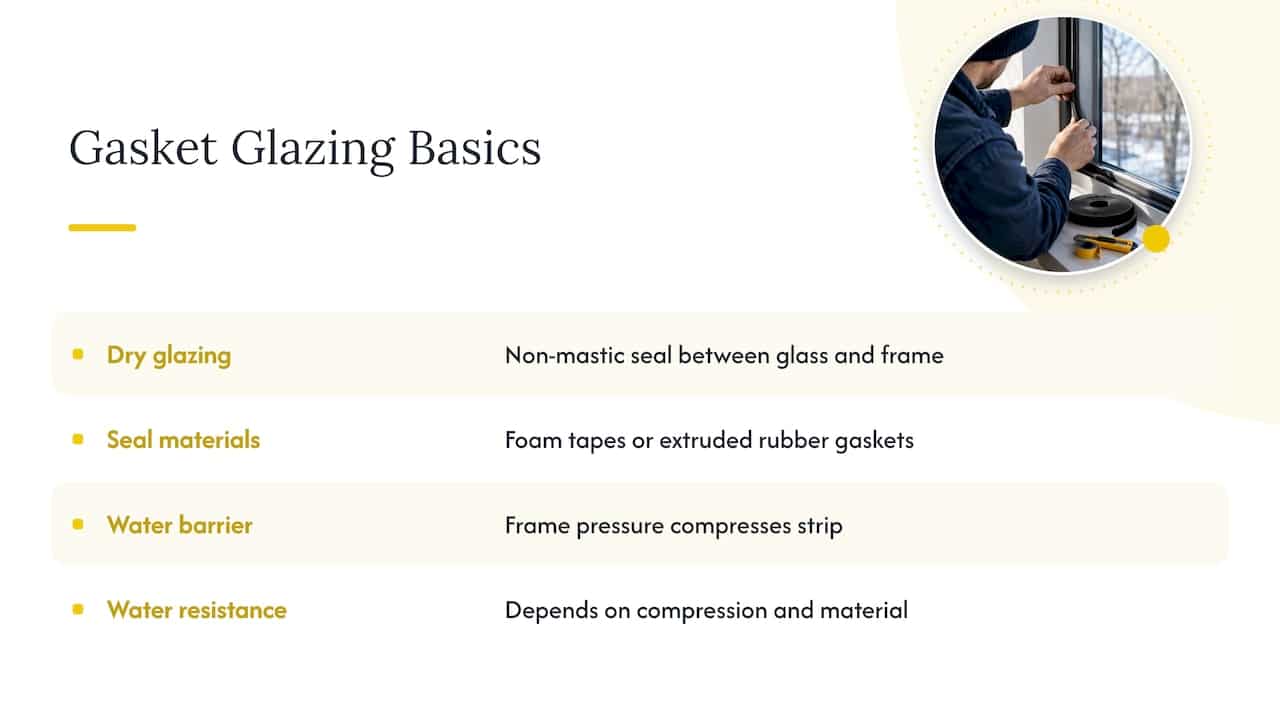
Construction Canada’s guide to commercial glazing defines dry glazing as the part of a glazing system that uses a non-mastic compound, either foam tapes or extruded rubber gaskets, as the seal between glass and frame. The same guide lists the common types: compression seals, structural (zipper or lock-strip) gaskets, vinyl or marine wrap glazing, and foam tapes.
The gasket works by pressure. The frame squeezes the strip against the glass, and that squeeze is what keeps water out. How much it is compressed, and what it is made of, determines how well it resists water getting into the glazing cavity.
Hybrid systems
The choice is not always either/or. AGC’s glazing guidance describes hybrid systems that use gun-applied sealants for external weatherproofing and gaskets for the internal seal. Whatever the mix, the system has to be watertight from outside to inside, airtight from inside to outside, and provide drainage and pressure equalisation from the interior to the exterior.
Gasket vs wet glazing at a glance
| Wet glazing (sealant) | Gasket (dry) glazing | |
|---|---|---|
| How it seals | Gun-applied sealant bonds glass to frame | Compressed rubber, vinyl or foam strip |
| Water and air resistance | High, with an uninterrupted seal | Good when compression is right, but not as water- and airtight |
| Installation access | Needs exterior access | Can be done from the interior |
| Upfront cost | Can cost more | Generally less |
| Main failure points | Adhesion loss, embrittlement, poor workmanship | Shrinking, rolling into the pocket, corner gaps, glass “walk” |
| Maintenance | Maintenance joint, at least an annual review | Check engagement, corners and weep holes; replace worn strips |
The comparison of advantages and limits comes from the manufacturer’s glazing brochure: wet glazing gives high resistance to water and air penetration, protects the edges of sealed units and reduces glass “walk”, with UV resistance, but it depends on workmanship. Dry glazing can be installed from the inside and is generally less costly, but it is not as water- and airtight, and gaskets can shrink, roll into the pocket and let the glass move.
Why the seal fails, and what Ontario weather does to it
In our experience after 25 years on Durham Region buildings, the glazing method matters less than people think. What decides how long a window stays tight is movement. Frames expand and contract, buildings settle, and in this part of the province the temperature can swing from well below freezing to a warm day in the same week. Every one of those cycles asks the seal to stretch and recover.
What happens to gaskets
A gasket depends on pressure to keep water out. Over time, weather exposure can make gaskets shrink or perish, which loosens the seal and lets moisture in. On a storefront or curtain wall, UV exposure and thermal cycling degrade gaskets, pressure plates and structural silicone bonds, which is why annual visual checks are recommended.
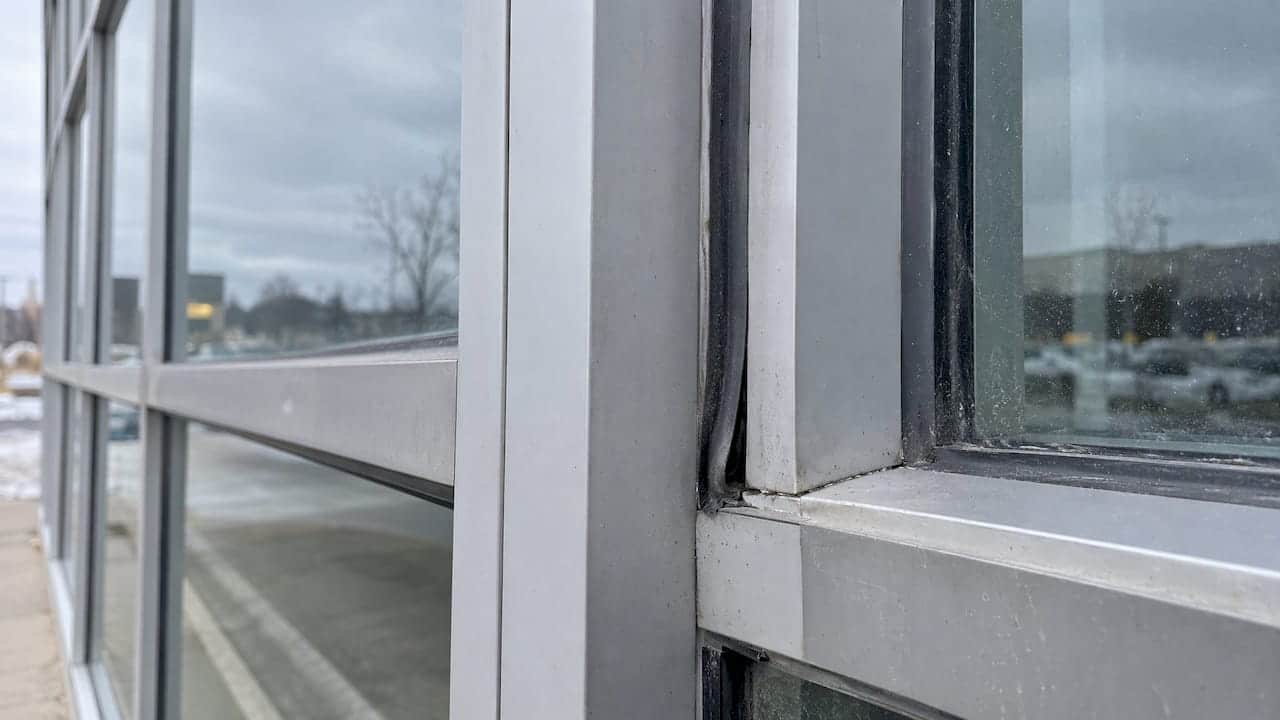
Corners are the weak point. Moulded or vulcanized gasket corners reduce water penetration at the system’s weakest point, and where they are not used, caulking may be needed at the corners. Installation also matters. A curtain wall installation manual for a Canadian product says gaskets should be cut a quarter inch longer per foot, laid flat for about 24 hours, and slightly crowded into place so they do not pull away from the corners as they relax afterwards.
What happens to sealant
Sealant fails differently. It does not shrink away so much as lose its grip or its flexibility. BC Housing’s sealant maintenance guide lists five failure signs to look for:
- loss of adhesion (the sealant lifts off the glass or frame)
- loss of cohesion (the sealant itself tears)
- loss of elasticity
- weathering, such as blistering, chalking, discolouration or cracking
- improper installation
The same guide notes that sealants on sun-exposed south sides break down faster than those on the north side. If you manage a building, that is worth knowing: the south and west elevations will tell you first.
AGC’s guidance treats wet-glazing sealing joints as maintenance joints, reviewed at least once a year for adhesion to frame and glass and for embrittlement, with renewals done promptly. It also suggests a minimum glazing cleaning frequency of every six months, using the wash to look over seals, drainage and frames.
Which one fits your property
There is no universal winner, so match the method to the building and who can reach it.
Homeowners
Most houses in Oshawa, Whitby, Ajax and Pickering have factory-built windows where the glazing is already set. What you deal with is the exterior perimeter sealant where the frame meets the brick or siding, plus weatherstripping and gaskets on operable sashes. BC Housing’s residential window guide points owners to regular inspection of exposed sealants and weather seals, checking that gaskets are fully engaged in operable windows, cleaning weep holes once a year, and replacing worn gaskets and weatherstripping as needed.
Signs that point to a seal problem: drafts near the frame, condensation between panes, staining below the sill, or a bead of caulk that is cracked, shrunk or peeling. Our guide to signs your window caulk needs replacing walks through them, and our piece on window reglazing vs caulking helps you tell which job you have.
Property managers and landlords
In multi-unit buildings the glazing question usually turns into a scheduling question. Which elevations are failing first, and can you reseal in stages? Start with the sun-exposed sides, keep a record of what you find on each walk-around, and use our guide to assessing window sealing in aging apartment buildings to organize it.
If gaskets, frames and hardware are degraded throughout a building, BC Housing treats that as a sign it is time to plan a full window replacement project rather than keep repairing piece by piece.
Commercial owners and facility managers
Storefronts and curtain walls are where the gasket vs wet glazing question is real, because both are in use and the stakes are higher. A facility checklist for commercial glass systems points out that curtain walls carry loads through aluminum mullions and structural sealant, so a failed structural sealant joint is a life-safety matter, not a cosmetic one. It describes an annual ground-level visual survey and a close-up contractor inspection every five years, including adhesion testing of structural sealant joints. Anything that looks like a structural glazing joint coming away from the glass should go to the building’s engineer or the glazing system supplier right away.
For the perimeter seals that fall within caulking, see our guide on how to inspect storefront window perimeter seals and the role of sealant in commercial windows.
Contractors, builders and investors
For new builds and renovations, the practical points are sequence and compatibility. AGC’s guidance says gaskets must be fully compatible with the other system components, and that corners and joints need particular care. The Canadian installation manual cited above warns that if sealant cures before the glass is set, excessive edge pressure can cause breakage. Plan the glazing and sealing trades together so neither is rushed.
For investors preparing a unit for sale or lease, a clean, continuous exterior seal is one of the least expensive ways to show that the envelope has been looked after, and it removes drafts and water stains that buyers and inspectors notice.
A simple inspection routine
You do not need special equipment for a first pass. Walk the building, or each window, with the following list.
- Look at the sealant bead. Cracks, gaps, chalky surface, discolouration, or edges lifting from the glass or frame are all failure signs from the list above.
- Check the gaskets. On operable windows, confirm they are fully engaged. On fixed glass, look for strips that have shrunk back, rolled into the pocket or opened at the corners.
- Check for glass movement. If a pane has shifted in its frame, the gasket or setting blocks are not doing their job.
- Clear the weep holes. Weep systems are essential with any compression glazing system, and a blocked one traps water in the pocket.
- Look for secondary signs. Fogging between panes, water staining, drafts and condensation channels that stay wet.
- Record and compare. Photograph the south and west faces first and repeat each year.
Our window caulking maintenance checklist gives a fuller version for homeowners.
Why you should not just caulk over it
The most common mistake we see is a fresh bead of caulk laid over an old, failing one. It looks fine for a season. BC Housing cautions that touching up sealant over an existing one, even with a compatible product, gives an inferior seal compared with the original installation, and recommends that sealant maintenance, meaning inspection, cleaning, touch-up, repair and replacement, be carried out by a trained professional.
That is also the right order of work: cut out the failed material, clean and prepare the joint, then apply new sealant. It is slower than a quick patch, and it is the version that survives a few winters.
Our perspective
When someone calls about a leaky window, the first question is rarely “gasket or wet glaze?” It is “where is the water getting in?” That is where we start.
After 25 years in Oshawa and across Durham Region, we have seen both systems last and both fail. What separates them is how well the joint was prepared, how much movement it has to absorb, and whether anyone looked at it again after the first year. A well-applied sealant bead that gets checked annually keeps buildings tight through freeze-thaw cycles. A good gasket is the same: right material, right compression, sealed corners.
We believe in doing it right the first time. That means premium materials suited to the Canadian climate, removing what has failed rather than covering it, and clear, honest pricing before work begins. We follow up so the result lasts.
If you are unsure what is holding your glass in, or whether the seal around it is still working, we will take a look and tell you plainly what we see.
Felix
What we do about it
Our commercial window caulking and residential window caulking services cover the perimeter sealing that keeps water and air out of windows on houses, multi-unit buildings and commercial properties across the Greater Toronto Area. We are fully insured, and we use premium materials suited to the Canadian climate. For larger properties, building envelope sealing lets us look at windows, doors and joints together rather than one at a time.

If your windows are drafty, stained or fogging, or you are planning ahead for a building, contact us through kettlecontracting.com and we will assess the seals and give you a clear plan.
FAQ
What does “wet glaze” mean?
Wet glazing means sealing glass into its frame with sealant applied from a cartridge or sausage using a caulking gun. The sealant fills the joint and forms a continuous seal. It contrasts with dry glazing, which uses rubber or vinyl strips, or foam tape, compressed against the glass.
Is wet glazing better than dry glazing?
Wet glazing offers high water and air resistance and an uninterrupted seal, so it suits exposed exterior joints where weather tightness is the priority. Dry glazing can be installed from the interior and is generally less costly. Many systems use both, with sealant outside and a gasket inside, so the right answer depends on the building.
How often should glazing seals be inspected?
AGC’s guidance calls for at least an annual review of wet-glazing sealant joints, plus cleaning and checking every six months. For commercial curtain wall and storefront systems, one facility checklist recommends annual visual inspection, with a full system inspection every three to five years. South- and west-facing sides deserve the closest look.
Can I just add new caulk over the old sealant?
It is not a good idea. BC Housing notes that a touch-up over existing sealant gives an inferior seal compared with the original installation. The failed material should be removed, the joint cleaned and prepared, and new sealant applied by a trained professional.
When is it time to replace the windows instead of resealing?
If frames, gaskets and hardware are degraded throughout a building, BC Housing treats that as a sign to plan full window replacement. If the problem is limited to the perimeter seal, resealing is usually the more practical step. A proper assessment tells you which case you have.
Sources
- AGC: IG glazing guidance, September 2025
- Construction Canada: Guide to designing and installing commercial IGU glazing
- Glazing brochure: wet and dry glazing compared
- BC Housing: Maintenance Matters 05, Sealant Maintenance
- BC Housing: Maintenance Matters 04, Residential Windows and Exterior Doors
- BC Housing: Maintenance Matters 13, Window and Door Replacement
- Reliance curtain wall installation manual
- Renaissance GSB: An Architect’s Guide to Glazing
- Building envelope maintenance guide
- Commercial window and glass system maintenance checklist