
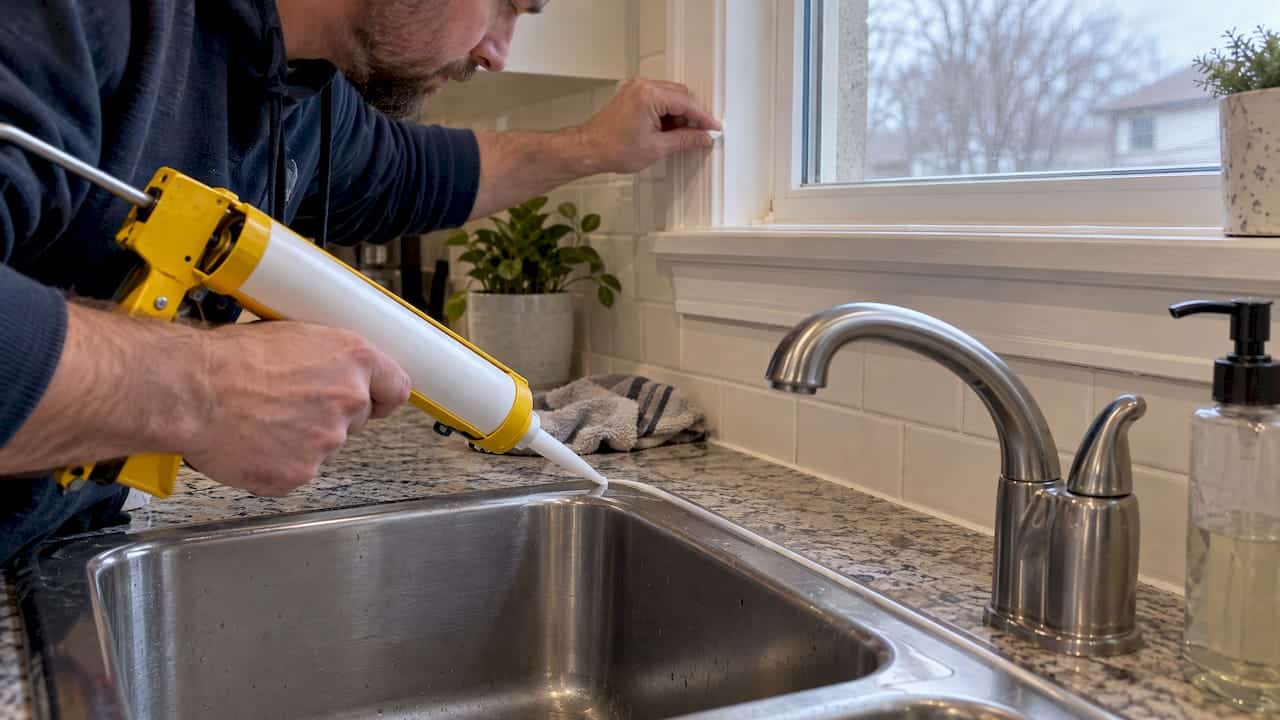
Paintable caulk belongs on dry interior joints that will be painted. Silicone belongs on joints that see water, sun and movement, and it stays bare or gets painted around, never over. Pick wrong and you get peeling paint, cracked beads or a leak behind the wall. After 25 years of sealing homes and buildings in Oshawa and across Durham Region, we can tell you the choice is rarely about brand. It is about the joint. If you would rather have it done once and done right, our interior and exterior caulking crews handle both products every week.
TL;DR
- Paintable acrylic latex caulk is water-based, takes paint and suits dry interior trim, baseboards and small cosmetic gaps.
- 100% silicone stays flexible and waterproof, so it suits tubs, showers, sinks and exterior window and door perimeters, but paint will not stick to it.
- Siliconized acrylic is paintable and a little more flexible than plain acrylic, but it is not silicone and not for joints where water sits.
- Paintable caulk will not bond over silicone. The old silicone has to be cut out completely first.
- Ontario’s freeze-thaw cycles punish the wrong choice on exterior joints within a few winters.
Table of Contents
- What the two products actually are
- Where each one belongs
- Siliconized acrylic: the in-between product
- Movement, lifespan and temperature
- Can you paint over silicone, or caulk over it?
- Preparing the joint
- Where silicone should not go
- Interior painting and caulk
- Our view
- When to hand it to us
- FAQ
- Sources
What the two products actually are
Acrylic latex caulk is water-based. It cleans up with water, dries to a firm finish and takes latex or oil-based paint. GE Sealants gives roughly 24 hours to dry, depending on humidity. It bonds well to porous surfaces such as wood, plaster and masonry, and it shrinks about 5 to 10% as it dries, which is why deep gaps sometimes need a second pass.
Silicone sealant is a different material. A true silicone caulk is about 95% or more silicone polymer. It stays flexible, repels water, resists UV and has minimal shrinkage. Because it is non-porous, paint beads up or peels on it. That is why silicone is sold in a range of colours instead.
In trade talk, “caulk” usually means the paintable acrylic and “sealant” means silicone. GE Sealants uses the same split, and so does most of the industry, though there is no formal standard separating the two words.
Where each one belongs
| Joint | Use | Why |
|---|---|---|
| Baseboard to drywall | Paintable acrylic | Dry, low movement, gets painted |
| Interior door and window casing | Paintable acrylic | Cosmetic gap under paint |
| Crown moulding, built-ins | Paintable acrylic | Paint-grade finish |
| Tub, shower, sink | 100% silicone | Constant moisture |
| Exterior window and door perimeter | 100% silicone (or a quality exterior-rated sealant) | Weather, UV, movement |
| Mixed-material joints (glass, metal, vinyl) | Silicone | Different materials move differently |
| Exterior trim that must be painted | Exterior-rated paintable sealant | Needs paint match and flexibility |
GE’s own guidance is that the choice comes down to conditions: moisture, movement or outdoor exposure point to silicone, while dry interior finishing where appearance under paint matters points to paintable caulk. A Toronto painters’ guide lists the same interior joints for paintable caulk.
Siliconized acrylic: the in-between product
This is where most homeowners get confused. Products sold as “acrylic latex plus silicone” are not silicone. They are acrylic with a small silicone addition, usually under 2% silane, for better adhesion and flexibility. The big benefit is that they stay paintable. One Canadian example, DAP Alex Plus, is paintable after 30 minutes with latex or oil-based paint.
The limits matter, and they are about safe, correct use:
- It is not meant for bath or shower use.
- Joints should be no wider than 1/2 inch and 1/2 inch deep, with foam backer rod if deeper.
- It will not adhere over 100% silicone.
For a painted window casing inside the house, siliconized acrylic is a good everyday choice. In a shower, it is the wrong product.
Movement, lifespan and temperature
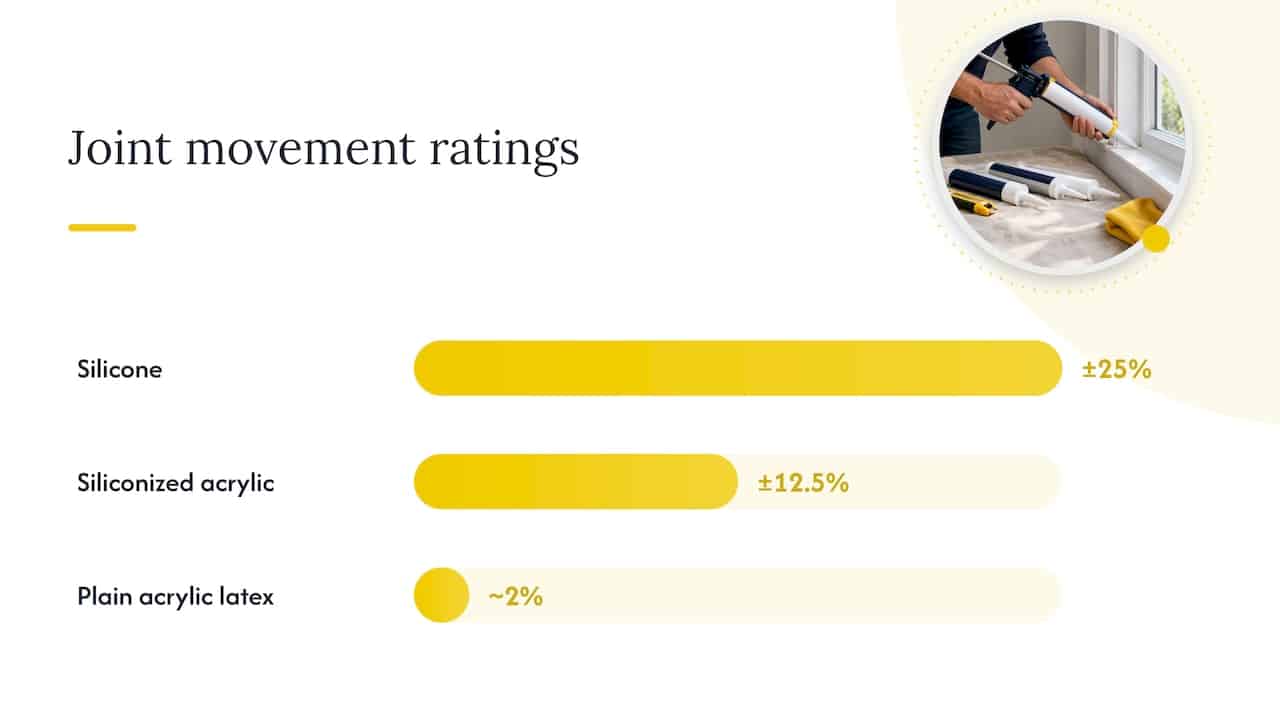
The numbers explain why exterior joints get silicone. One Canadian manufacturer’s selection guide rates its silicone at ±25% joint movement and its siliconized acrylic at ±12.5%. A technical bulletin lists plain acrylic latex at about 2% movement, 4 to 10 years of life and interior use only. Windows Canada puts exterior silicone at 20+ years with a 24-hour skin and 7 to 14 days to full cure.
Those are product ratings, not guarantees. Real life in Durham Region means a window frame that swells in July and contracts at -20°C in January. A caulk that cannot follow that movement splits at the bond line.
Temperature at application matters too. Avoid caulking below 5°C because frost on the surface ruins adhesion. If you must work in the cold, solvent-based and silicone sealants suit better than latex.
Can you paint over silicone, or caulk over it?
No to both. Paint will not hold on cured silicone. A shellac-based primer is sometimes given as a last resort, but we would not build a finish on it. Paintable caulk does not stick either: DAP states that paintable latex caulks will not adhere to 100% silicone or its residue. The silicone must be cut, scraped and scoured away. We cover this in more detail in our guide to painting over silicone caulk.
The right order for joints that need both:
- Paint the surrounding surfaces first.
- Let the paint cure.
- Apply the silicone to the finished surface.
That is the order GE recommends, and it gives a clean line with no paint touching the silicone.
Preparing the joint
Most failures we are called to fix are preparation failures, not product failures. New caulk does not bond to old caulk, so the old bead has to be cut out. Clean off dirt, paint flakes and grease, wipe with rubbing or denatured alcohol and let it dry fully. Soap residue also stops adhesion, which matters around tubs.
Our guide to preparing windows for caulking walks through it step by step.
Where silicone should not go
- Bare concrete, masonry and steel: general-purpose silicone is not the right fit. Window Force reports NRCan’s advice to use neutral-cure silicone on masonry only when the cartridge lists masonry.
- Galvanized surfaces and below the water level: GE warns against silicone in both.
- Joints that must match painted trim colour: use a paintable product there.
- Weep holes, the bottom edges of lap siding and flashing drainage gaps: leave these open. Sealing them traps moisture in the wall.
Also keep in mind that sealant is not a primary waterproofing method. Flashing and proper details do that work, and the sealant protects the joint. On brick homes, see our notes on window caulking for brick.
Interior painting and caulk
If you are prepping rooms for paint, caulk the trim gaps first with a product labelled paintable, then follow the manufacturer’s paint-ready time instead of a generic rule. Using the wrong sealant and painting over it is one of the most common finish-paint problems on trim. For a wider look at interior prep, see this drywall painting and prep guide. Bathrooms are the opposite case: choose waterproof materials and finish the wet joints in silicone.
Our view
We have pulled out a lot of caulk that was perfectly good caulk in the wrong place. Acrylic on a south-facing window exterior, silicone on a baseboard that someone later wanted painted, a bead laid over the old bead because it was quicker.
Our rule on site is simple. Look at the joint. Does it see water, sun or movement? Silicone, on a clean, dry, properly prepped joint. Is it dry, inside and going under paint? Paintable caulk. Is it an exterior joint that has to be painted? An exterior-rated paintable sealant, and we say so up front.
Doing it right the first time matters more than the tube you pick, because Ontario’s freeze-thaw cycles find every shortcut. We use materials suited to the Canadian climate and we are fully insured, and we would rather explain the choice than leave you guessing.
Felix
When to hand it to us
On a single bathroom, you may be comfortable choosing the tube. On a full set of exterior windows, a multi-unit building, a commercial facade or a brick home with failing joints, the choice, prep and cutting-out are where the job is won. Kettle Contracting serves homeowners, landlords, property managers, commercial owners and builders across the GTA and Durham Region. See our residential window caulking, door caulking and weather sealing and building envelope sealing.

For commercial buildings, our commercial window caulking and expansion joint sealing cover the larger joints. Contact us through kettlecontracting.com for a quote.
FAQ
Is silicone caulk paintable?
No. Pure silicone is non-porous, so paint beads up or peels. If a joint needs painting, use a product labelled paintable, or paint the surfaces first and apply silicone afterward.
Is siliconized acrylic the same as silicone?
No. Siliconized acrylic is an acrylic caulk with a small silicone addition. It stays paintable and has better adhesion and flexibility than plain acrylic, but it is not for showers or joints where water sits.
Can I use paintable caulk over old silicone?
No. Paintable latex caulk will not adhere to silicone or its residue. Remove all the old silicone first, then clean and dry the joint before applying new sealant.
Which is better for exterior windows in Ontario?
For exterior window perimeters that stay unpainted, 100% silicone is the standard recommendation for Canadian climates. If the joint must be painted, we use an exterior-rated paintable sealant. See our exterior window caulk comparison.
Sources
- GE Sealants: Caulk and paint, which comes first?
- GE Sealants: Frequently asked questions (Canada)
- GE Sealants: Sealant installation FAQ
- GE Sealants: Silicone sealant vs. caulk
- Technical Services Information Bureau caulking guide
- Caulking Compounds and Sealants presentation
- Home Hardware caulking buying guide
- Fine Homebuilding: Paintable caulks and sealants
- DAP Alex Plus product page
- DAP FAQs
- Sealant selection guide
- ABCO technical bulletin
- Windows Canada caulking guide
- Window Force: polyurethane vs silicone
- UBC Technical Guidelines, joint sealants
- Caulking before painting guide
- Caulk FAQ
- Drywall painting guide
- Bathroom vinyl flooring guide