
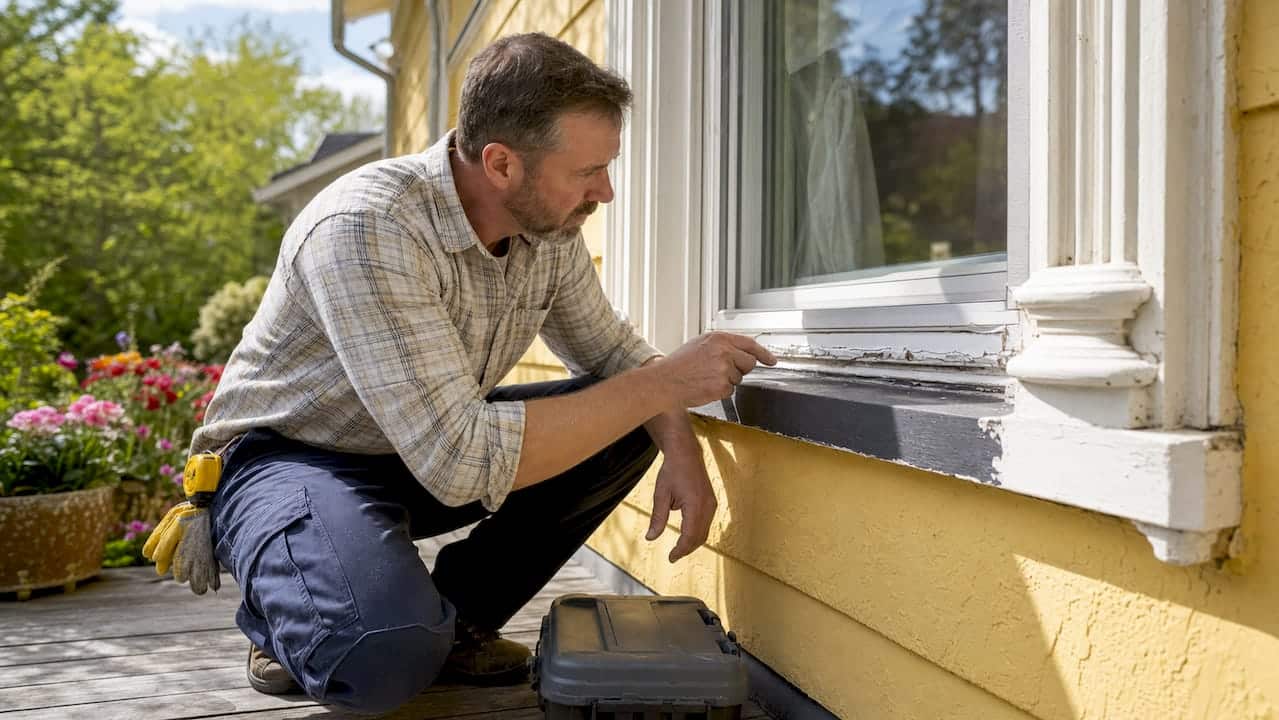
Deferred caulking maintenance is defined as the deliberate or unintentional postponement of sealant repairs, and it is one of the most predictable ways repair costs multiply on a property. A hairline crack in window caulking costs $150–$300 to fix at the early stage. Leave it through two or three Ontario freeze-thaw cycles and you are looking at costs exceeding $10,000 once rot, mould, and structural damage set in. For homeowners, property managers, and real estate investors, understanding how deferred caulking maintenance costs rise is the difference between a routine maintenance line item and a budget-breaking repair bill.
What causes deferred caulking costs to rise over time?
Sealant failure follows a predictable progression. A small crack lets in moisture. That moisture works into the substrate behind the caulk, whether that is wood framing, drywall, or masonry. Over time, the damage compounds in ways that are invisible until they are expensive.
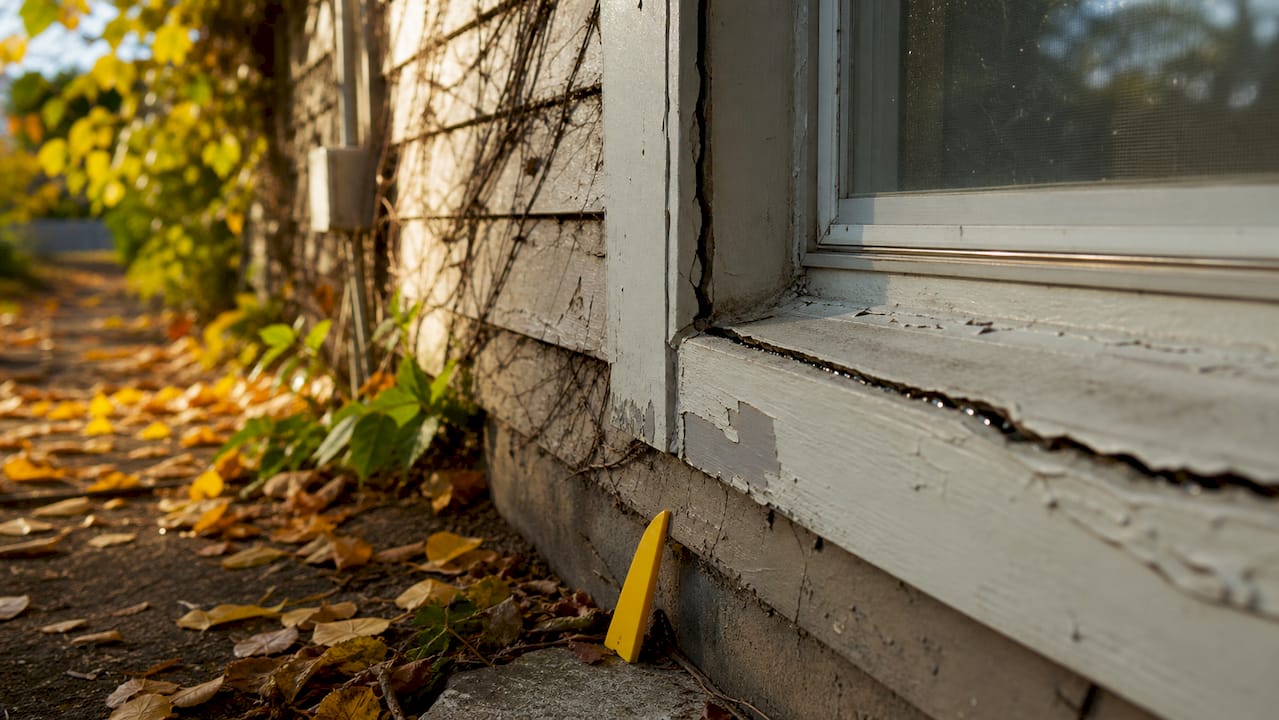
Ontario’s climate accelerates this process. Water enters a gap, freezes overnight, expands, and forces the opening wider. By spring, what was a 2mm crack is a 6mm gap. Repeat that cycle over two or three seasons and you have a moisture pathway that feeds wood rot, mould growth, and weakened framing. The impact of delayed caulking is not gradual. It is exponential.
The most common mistake that accelerates this damage is applying fresh caulk directly over old, cracked sealant. Top-coating traps moisture underneath and speeds up wood rot rather than stopping it. Effective repairs require complete removal of the degraded sealant, proper surface preparation, and the application of a movement-capable sealant that can flex with seasonal expansion and contraction. Anything less is a temporary fix that creates a bigger problem later.
Here is what the physical damage chain looks like in practice:
- Cracked or shrinking sealant around windows or doors lets water past the exterior cladding
- Moisture infiltrates wood framing, insulation, and interior finishes
- Wood rot develops in as little as one season under persistent wet conditions
- Mould growth follows, requiring professional abatement that adds significant cost
- Structural weakening in framing or masonry requires trade-level repairs, not just sealant work
Pro Tip: Book a visual inspection every spring and autumn. Catching a failing seal before winter arrives is the single most cost-effective maintenance habit a property owner can build.
How does deferred caulking maintenance affect insurance claims and out-of-pocket costs?
Insurance is where deferred caulking maintenance gets financially dangerous. Most homeowners assume water damage is covered. The reality is more complicated, and more expensive.
Most Canadian insurance policies exclude coverage for gradual, climate-driven sealant and building envelope failure. Insurers classify this as a maintenance issue, not a sudden insured event. That means when moisture from a failed window seal eventually causes a flooded basement or rotted wall cavity, the homeowner bears the full restoration cost. Water damage restoration for a flooded basement averages $25,000 to $45,000 in Canada, with major commercial envelope failures exceeding $30,000.
Even when a claim is technically valid, the financial exposure has grown. Water-related deductibles in high-risk zones now start at $2,500 or more. That shifts frequent, smaller water losses entirely back to the homeowner. Proactive caulking maintenance is now a direct cost-control measure, not just a building upkeep task.
“Waiting for a sudden insured event often results in 100% restoration cost liability for owners. Gradual moisture damage from deferred maintenance is rarely fully covered by insurance, leaving homeowners responsible for tens of thousands of dollars in repairs.”
The table below shows how insurance exposure stacks up against maintenance costs:
| Scenario | Typical cost | Insurance coverage |
|---|---|---|
| Early sealant repair | $150–$300 | Not required |
| Mid-stage water damage repair | $3,000–$6,000 | Partial, subject to deductible |
| Basement flood restoration | $25,000–$45,000 | Often excluded for gradual damage |
| Commercial envelope failure | $30,000+ | Frequently denied for deferred maintenance |
Understanding how exterior caulking affects insurance claims before a problem develops is far less painful than learning it during a claim.
What are the typical cost differences between timely and delayed caulking repairs?
The cost gap between early maintenance and late-stage repair is not incremental. It is dramatic. Deferred maintenance follows an escalating cost curve with early intervention at $150–$300, mid-stage repairs at $3,000–$6,000, and late-stage renovation costs exceeding $10,000.
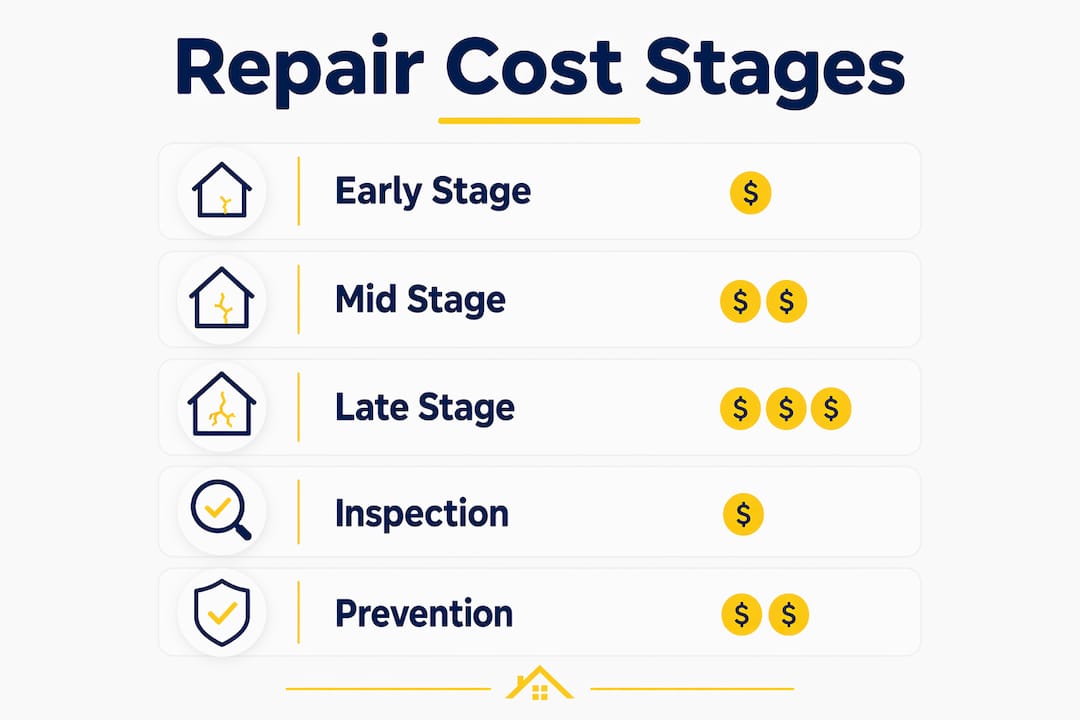
Early-stage maintenance: $150–$300
At this stage, the sealant is cracking or pulling away from the substrate but moisture has not yet penetrated deeply. A professional removes the old caulk, prepares the surface, and applies a fresh movement-capable sealant. The job takes a few hours. The building is protected for years.
Mid-stage repairs: $3,000–$6,000
By mid-stage, moisture has entered the wall assembly. You are now paying for sealant replacement plus remediation of water-damaged materials. Interior finishes may need to come down. Insulation may need replacing. The scope of work has multiplied from a single trade to several.
Late-stage renovation: $10,000 and beyond
At this point, structural framing is compromised, mould is present, or both. Mould abatement alone adds thousands to the bill. In multi-unit or commercial buildings, scaffolding costs $20,000 to $35,000 before a single repair is made. These are the hidden costs that property managers rarely budget for because they assume the problem will stay small.
Pro Tip: For multi-unit buildings, get a professional envelope inspection every two years. The cost of that inspection is a fraction of one scaffolding mobilisation.
Routine seasonal inspections that catch early sealant failure cost $300–$1,200 and prevent facade failures that exceed $9,500. The math is straightforward. The decision should be too.
How can homeowners and property managers prevent rising deferred caulking costs?
Prevention is the most effective way to control caulking maintenance costs. The steps are not complicated, but they do require consistency and the right approach.
-
Inspect twice a year. Walk the exterior of your property every spring and autumn. Look for cracking, shrinking, or pulling sealant around windows, doors, expansion joints, and where different cladding materials meet. Catching a failing seal before winter is far cheaper than addressing the damage after.
-
Never apply new caulk over old. This is the most common and costly caulking mistake homeowners make. Topping up old sealant traps moisture and delays the inevitable while making the eventual repair more expensive.
-
Use movement-capable sealants. Not all caulking products perform equally in Ontario’s climate. A sealant that cannot flex with freeze-thaw movement will crack within one or two seasons. Professional-grade products rated for high movement joints last significantly longer and reduce re-application frequency.
-
Hire a professional for complete removal and replacement. Surface preparation is the part most DIY repairs skip. Without it, even a good sealant will fail prematurely. A professional removes all degraded material, cleans and primes the substrate, and applies the correct product for the joint type and exposure.
-
Consider a preventive maintenance contract. For property managers overseeing multiple units, a scheduled inspection and maintenance agreement locks in regular attention at a predictable cost. It also creates a documented maintenance record, which matters for insurance purposes and resale.
Pro Tip: Ask your caulking contractor to document every repair with photos and product specifications. That record protects you if an insurer questions whether gradual damage resulted from neglect.
The benefits of preventive caulking maintenance go beyond cost savings. A well-maintained building envelope also performs better for energy efficiency and air quality.
What long-term impact does deferred caulking maintenance have on property value?
Deferred caulking maintenance does not stay invisible. Buyers, inspectors, and lenders all notice the signs of a poorly maintained building envelope, and they price it accordingly.
- Reduced resale value. Visible water staining, cracked sealant, or evidence of past moisture damage signals deferred maintenance to buyers. That perception translates directly into lower offers or requests for price reductions.
- Failed home inspections. A home inspector who flags multiple sealant failures, moisture intrusion, or mould gives buyers grounds to renegotiate or walk away. For investors, that kills deals.
- Insurance complications at resale. A property with a history of water damage claims or documented deferred maintenance can face higher premiums or coverage refusals. That affects both the current owner and the buyer.
- Legal liability for property managers. Canadian legal rulings establish that building owners must address defects posing substantial dangers promptly. Deferred maintenance is not just a financial risk. It is a legal one.
- Shortened building lifespan. Persistent moisture infiltration degrades structural components faster than normal wear. A building that should last 50 years may need major renovation at 30 if the envelope is not maintained.
The financial case for early maintenance is clear. A $300 repair today protects an asset worth hundreds of thousands of dollars. Deferring that repair to save money in the short term costs far more in the long run, in repair bills, lost value, and legal exposure.
Key takeaways
Deferred caulking maintenance costs rise exponentially because minor sealant failures compound into structural damage, insurance exclusions, and legal liability that far exceed the original cost of a timely repair.
| Point | Details |
|---|---|
| Early repairs cost far less | Fixing sealant at the first sign of failure costs $150–$300 versus $10,000+ at the late stage. |
| Insurance rarely covers gradual damage | Most Canadian policies exclude moisture damage from deferred maintenance, leaving owners fully exposed. |
| Top-coating accelerates damage | Applying new caulk over old traps moisture and makes eventual repairs more expensive. |
| Multi-unit buildings face hidden costs | Scaffolding alone can add $20,000–$35,000 to delayed repair bills in larger properties. |
| Preventive maintenance protects asset value | Regular inspections and timely repairs preserve resale value and reduce legal liability for owners. |
What I have seen after 25 years of caulking in Oshawa
The pattern I see most often is not neglect. It is optimism. A homeowner notices a crack around a window frame in september, tells themselves it is minor, and plans to deal with it in the spring. By the time spring arrives, water has been working behind that frame all winter. What would have been a two-hour job is now a two-day job involving drywall, insulation, and sometimes framing repairs.
The other thing I see constantly is the top-coat mistake. Someone buys a tube of caulk at a hardware store, squeezes it over the old cracked sealant, and considers the job done. That new bead looks fine for a few months. Underneath, the trapped moisture is doing real damage. When I pull that old sealant out later, the wood behind it is soft and dark. That is rot. It did not have to happen.
What homeowners and property managers consistently underestimate is how much Ontario’s climate punishes a building envelope. The freeze-thaw cycle here is relentless. A sealant that is 80% functional in october is 40% functional by march. The building does not wait for you to get around to it.
My honest advice: treat caulking like you treat your furnace filter. It is not glamorous maintenance. But skipping it costs you far more than doing it on schedule. Get a professional to look at your envelope once a year. Fix what needs fixing before winter. That single habit will save you more money over ten years than almost any other maintenance decision you make.
— Felix
Kettlecontracting: professional caulking maintenance for the Greater Toronto Area
Caulking is trade-specific work that requires the right products, proper surface preparation, and experience with how buildings move and age in Ontario’s climate. A rushed or incorrect application does not just fail early. It can make the underlying problem worse.

Kettlecontracting serves homeowners, property managers, and real estate investors across the Greater Toronto Area with professional-grade sealant work for windows, doors, expansion joints, and full building envelopes. Whether you need a single window resealed or a scheduled maintenance programme for a multi-unit property, the team at Kettlecontracting brings the same standard of care to every job. Contact Kettlecontracting to schedule an inspection and get an honest assessment of your property’s caulking condition before the next season creates a bigger problem.
FAQ
What is deferred caulking maintenance?
Deferred caulking maintenance is the postponement of sealant repairs beyond the point when they are needed. It causes minor cracks to escalate into moisture infiltration, structural damage, and significantly higher repair costs.
How quickly do deferred caulking costs rise?
Costs can escalate from $150–$300 at the early stage to over $10,000 at the late stage within a few seasons, particularly in climates with repeated freeze-thaw cycles like Ontario.
Does home insurance cover damage from failed caulking?
Most Canadian insurance policies exclude gradual moisture damage caused by deferred sealant maintenance. Homeowners typically bear the full cost of restoration, which averages $25,000–$45,000 for flooded basements.
Can I apply new caulk over old caulk to save money?
Applying new caulk over old, cracked sealant traps moisture and accelerates wood rot. Complete removal, surface preparation, and fresh application of a movement-capable sealant is the only repair method that lasts.
How often should caulking be inspected?
A professional inspection every spring and autumn is the standard recommendation. For multi-unit or commercial properties, a formal envelope inspection every two years helps catch early failures before they require costly scaffolding and abatement work.