
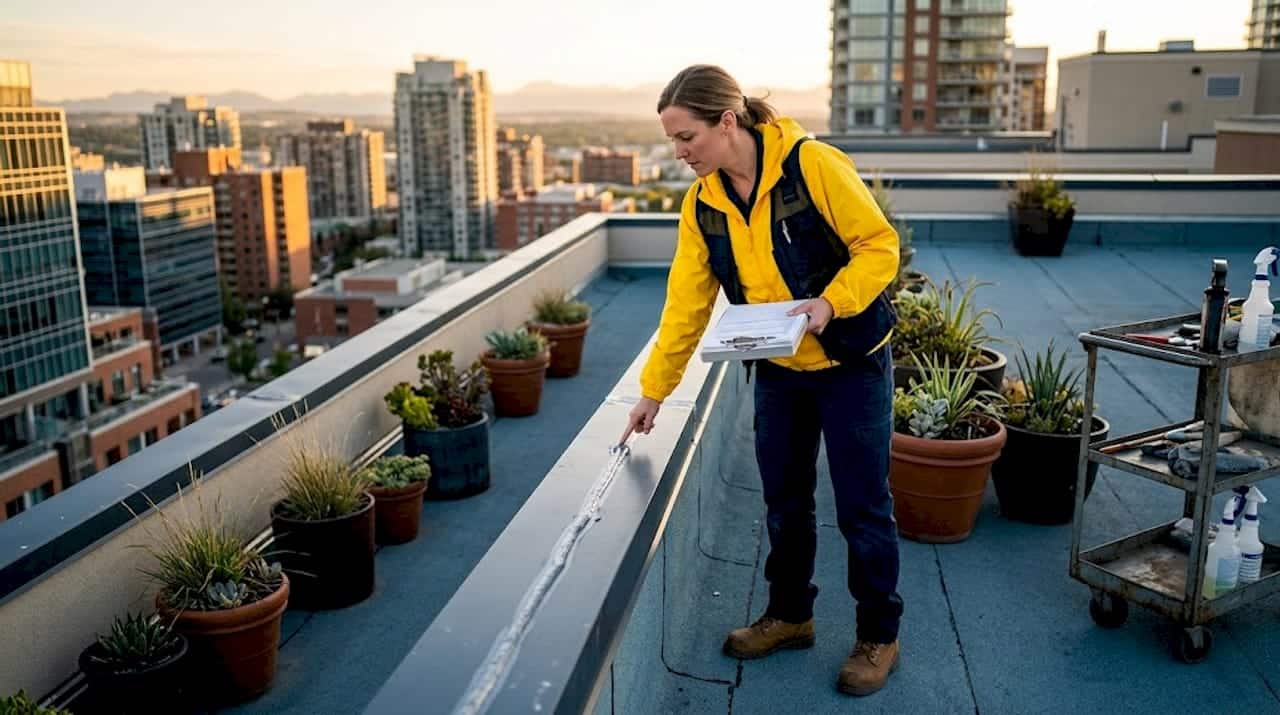
Exterior sealant gets treated like an afterthought on most properties. A bead of caulk around the windows, a coat of waterproofing on the foundation, and the job feels done. But understanding how exterior sealant protects your asset long term changes the way you think about building maintenance entirely. Water infiltration, UV exposure, and Ontario’s brutal freeze-thaw cycles are constantly working against your building envelope. The cost of ignoring those forces is not a small repair bill. It is structural damage, mould remediation, and depreciated property value. This guide covers how sealants work, which types hold up best, and how to apply them correctly so your investment stays protected for years.
Table of Contents
- Key takeaways
- How exterior sealant protects your building envelope
- Choosing the right sealant type for your property
- Common failure points that compromise sealant performance
- The financial case for proactive sealant maintenance
- Best practices for sealant application and maintenance
- My honest take after 25 years on the job
- Protect your property with Kettlecontracting
- FAQ
Key takeaways
| Point | Details |
|---|---|
| Sealants block more than water | Exterior sealants resist UV rays, pollutants, and thermal movement, not just moisture. |
| Sealant type matters significantly | Silicone, polyurethane, and hybrid sealants each serve different substrates and conditions. |
| Surface prep prevents early failure | Improper cleaning before application is the leading cause of sealant debonding and short lifespans. |
| Proactive sealing saves real money | Quality sealant work costs far less than structural repairs or mould remediation down the road. |
| Inspections extend sealant life | Scheduling annual checks and timely resealing keeps your building envelope performing reliably. |
How exterior sealant protects your building envelope
The core function of any exterior sealant is to form an impermeable barrier between your building’s structure and the elements trying to get through it. Water is the most destructive of those elements. When it penetrates joints, gaps around windows and doors, or cracks in masonry, it works its way into the substrate and causes rot, mould growth, and progressive structural weakening. A properly applied sealant seals those entry points completely.
Beyond waterproofing, quality sealants contain UV-blocking compounds that prevent material oxidation. Without that protection, surfaces like wood, concrete, and painted cladding break down from sun exposure alone. UV degradation reduces flexibility and causes cracking, which opens fresh pathways for moisture. The sealant essentially slows that degradation cycle before it starts.
Flexibility is another property that often goes unappreciated. Buildings move. They expand in summer heat and contract during cold Ontario winters. A sealant that cannot flex with that movement will crack and debond. Modern sealants are formulated to absorb thermal expansion and contraction without losing seal integrity.
Here is what a well-chosen exterior sealant defends against on a daily basis:
- Water infiltration through joints, seams, and substrate cracks
- UV radiation that degrades surface materials and oxidises coatings
- Airborne pollutants and chemicals that break down exposed surfaces
- Biological growth like algae and mould that colonise moisture-rich gaps
- Thermal movement stress at joints around windows, doors, and expansion points
Pro Tip: Sealants also reduce air leakage, which directly lowers your heating and cooling costs. That energy efficiency benefit often goes unmentioned, but it adds measurable value year over year.
Choosing the right sealant type for your property
Not all sealants are interchangeable. Selecting the wrong product for your substrate or joint type is one of the fastest ways to end up with a failed seal within a season. Understanding the major types helps you make a better decision from the start.
Silicone sealants are the gold standard for joints that experience a lot of movement, like those around windows and doors. They handle moisture exposure extremely well and stay flexible across a wide temperature range. The downside is that silicone cannot be painted over. Once it is in place, the colour you apply is the colour you keep.
Polyurethane sealants bond aggressively to concrete, masonry, and wood. They are abrasion-resistant and paintable, which makes them a preferred choice for horizontal surfaces, pavement joints, and areas subject to foot or vehicle traffic. They do require more careful application because they are less forgiving than silicone during cure.
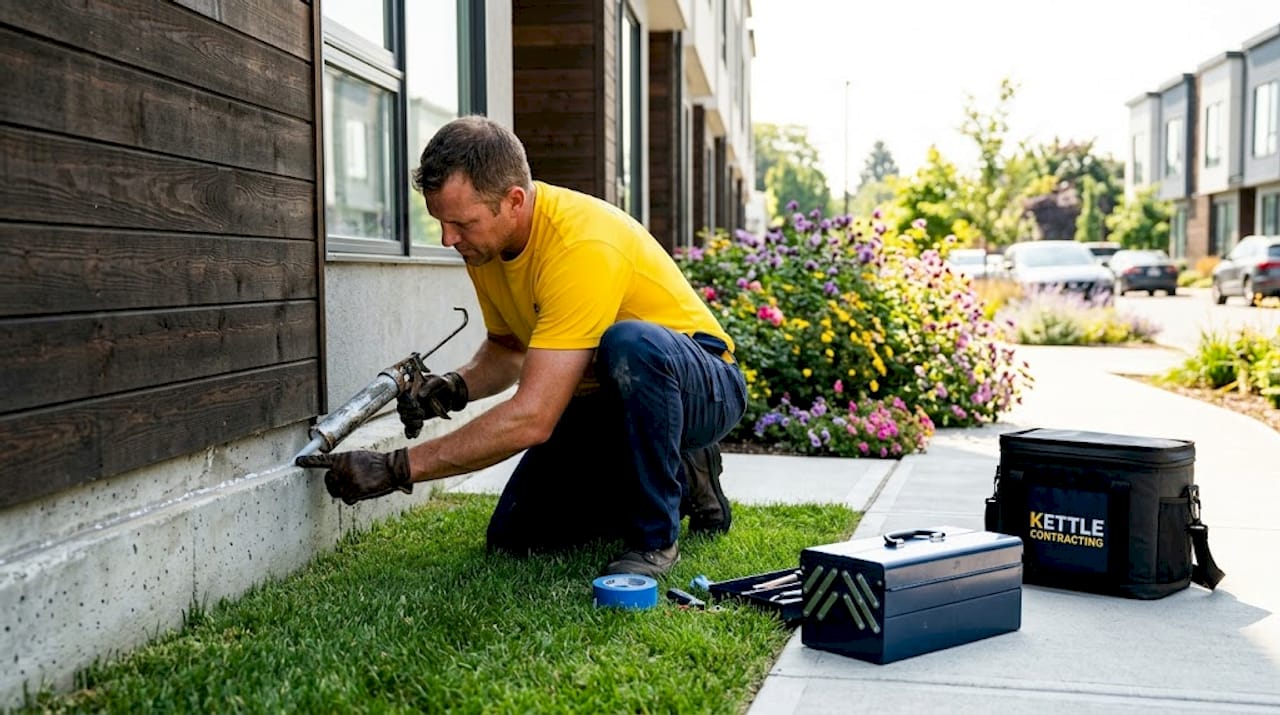
Hybrid sealants combine the flexibility of silicone with the paintability of polyurethane. For siding applications and general building envelope work, hybrids are increasingly popular because they check both boxes without major compromise.
Liquid rubber and bentonite clay products are used primarily for foundation waterproofing. Liquid rubber forms a seamless membrane when applied, while bentonite clay swells when it contacts water to create a natural barrier. Both are effective, but they differ in durability and application requirements depending on soil conditions and foundation type.
| Sealant type | Flexibility | Paintable | Best use |
|---|---|---|---|
| Silicone | High | No | Windows, doors, wet areas |
| Polyurethane | Medium | Yes | Concrete, masonry, pavement |
| Hybrid | High | Yes | Siding, general building envelope |
| Liquid rubber | Medium | No | Foundation waterproofing |
| Bentonite clay | Low | No | Below-grade foundation sealing |
Sealants resist environmental stresses while allowing for joint movement, which is why matching the product to the specific condition is worth the time investment before any work starts.
Pro Tip: If you are unsure whether a joint experiences significant movement, place a strip of tape across it and check after a week of temperature swings. Wrinkling or lifting tells you the joint moves and needs a flexible sealant. Check out which caulk works best for exterior windows specifically if you are working on that area of your building.
Common failure points that compromise sealant performance
Sealant failures are almost always preventable. After 25 years in this trade, the pattern is consistent. The product rarely fails on its own. The failure happens before or during application.
Surface preparation is where most problems start. Applying sealant over dirty, wet, or contaminated surfaces guarantees a short lifespan. Improper prep is a leading cause of debonding, regardless of how good the product is. Biological growth like algae and mould, leftover residue from old sealant, and even dust all prevent proper adhesion.
The second major failure point is selecting the wrong sealant for the joint type. Expansion joints absorb structural movement and require specifically flexible sealants to maintain waterproofing over time. Using a rigid product in a moving joint will result in cracking within one or two freeze-thaw cycles.
Ontario’s climate accelerates deterioration in ways that milder regions do not experience to the same degree. Repeated freezing and thawing forces water that has seeped into micro-gaps to expand and contract, widening cracks progressively. UV exposure through summer compounds this by hardening and brittling exposed sealant beads.
Here is where sealant performance typically breaks down:
- Applying over wet or contaminated surfaces
- Using silicone in locations that need to be painted afterward
- Selecting rigid products for high-movement joints
- Skipping primer on porous substrates like concrete or brick
- Allowing old, cracked sealant to remain rather than removing it fully
- Resealing too infrequently and letting small failures grow into large ones
DIY patch jobs usually miss one or more of these points. A bead of caulk pressed over old, failed material might look fine for a season. It will not hold through a hard Ontario winter.
The financial case for proactive sealant maintenance
The numbers on this are straightforward. Exterior foundation sealing can prevent asset value losses of up to $30,000 on a $300,000 property by stopping water infiltration before it reaches the structure. That is a 10% loss on your property’s value from a problem that a properly maintained seal prevents entirely.
Compare that to the cost of proactive waterproofing work. Average waterproofing services run between $4,000 and $8,000, which is a fraction of what mould remediation or major structural rehabilitation costs. Those reactive repairs also disrupt tenants, delay operations in commercial facilities, and can trigger insurance complications.
A property well-maintained from the outside rarely surprises you with major repair bills on the inside. Sealant is the most cost-effective layer of protection in your maintenance programme.
Energy efficiency is another financial benefit that property owners often undercount. Sealing air leaks reduces heating and cooling loads measurably. For a multi-unit property or commercial building, that adds up to real savings on utility costs across every billing cycle.
There is also a market value consideration. Sealcoating and exterior sealing enhance aesthetic appeal and property marketability alongside their protective function. Buyers and tenants notice well-maintained exteriors. Facility managers who keep detailed maintenance records, including sealant service history, find those records support higher valuations and smoother insurance renewals.
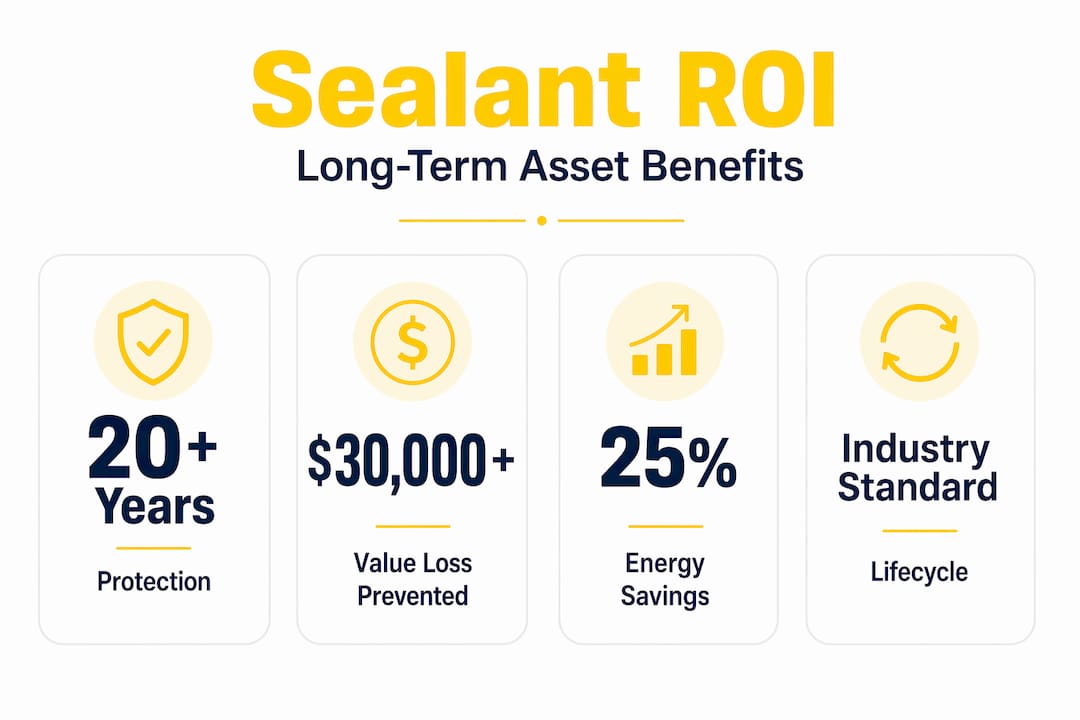
Proactive sealant strategies are now recognised as industry standards for lifecycle performance, not optional add-ons. Integrating sealant maintenance into your annual building care budget is the most direct way to reduce maintenance costs on investment properties over time.
Best practices for sealant application and maintenance
Getting sealant work right from the start is what separates a seal that lasts a decade from one that fails after two winters. Here is a practical sequence for doing it properly.
-
Select the right product first. Identify the substrate, the expected joint movement, and the exposure conditions before purchasing anything. A silicone product for a painted wood siding application will create a mess that is difficult to correct.
-
Clean and dry the surface thoroughly. Remove all biological growth, old sealant residue, dust, and oils. The surface must be completely dry before application. Even residual moisture from recent rain can compromise adhesion from the start.
-
Prime porous substrates. Concrete, brick, and some wood surfaces benefit from a primer coat that improves sealant adhesion and extends the seal’s lifespan.
-
Apply in appropriate weather. Most sealants cure best between 5°C and 30°C with low humidity. Applying sealant at optimal conditions significantly extends its effective lifespan. Avoid application when rain is forecast within 24 hours.
-
Allow full cure before exposure. Touching or stressing a fresh sealant bead before it has cured properly can break adhesion at the edges. Follow manufacturer cure times, which vary by product and temperature.
-
Schedule annual inspections. Walk your building perimeter each spring and autumn. Look for cracking, shrinkage, discolouration, or separation from the substrate. Early detection means a simple reseal rather than a full removal and replacement.
-
Reseal on a predictable cycle. Most exterior sealants perform well for five to ten years under normal conditions. High-movement joints or heavily exposed areas may need attention sooner.
Pro Tip: Sealing is increasingly recognised as a core component of durable building envelopes, not just a finishing step. Treat your sealant inspection the same way you treat your roof inspection. It is a structural concern, not a cosmetic one. You can also learn how exterior insulation depends on sealant to perform correctly if you are managing an insulated building envelope.
My honest take after 25 years on the job
I’ve seen the same story play out on hundreds of properties across the Greater Toronto Area. A building gets some cosmetic work done, a fresh coat of paint, maybe new trim, and sealant is either skipped entirely or applied with minimal care over old, failed material. Two or three winters later, the owner is looking at water damage inside walls, mould behind baseboards, or a foundation issue that requires excavation to fix.
What frustrates me most is that the sealant phase of any exterior project is not the expensive part. It is not even the time-consuming part when it is done right from the beginning. The expense comes from ignoring it.
I’ve championed annual inspection programmes for a long time, partly because they catch the small failures before they grow, and partly because they build a maintenance record that genuinely protects property owners. Insurers and buyers both respond to documented care. A property that has been consistently sealed and inspected tells a story of responsible ownership.
Quick patch jobs do not hold through Ontario winters. Full stop. I have seen commercial facilities spend three times more on reactive repairs than they would have spent on proactive maintenance over the same period. Proper sealant work, done with the right product and the right preparation, pays for itself every time.
— Felix
Protect your property with Kettlecontracting
If you are ready to take your building’s protection seriously, Kettlecontracting is here to help. We specialise in high-performance caulking and sealant solutions for residential and commercial properties across the Greater Toronto Area, working with everything from custom homes to multi-unit buildings and commercial facilities.

Our team handles window and door caulking, expansion joint sealing, and full building envelope work using products matched to Ontario’s climate and your specific substrate. We also offer long-lasting caulk solutions and guidance on proper window preparation to make sure every sealant application performs the way it should. Whether you need an initial evaluation or want to schedule a full exterior sealing service, reach out to Kettlecontracting and let’s make sure your property is properly protected before the next season arrives.
FAQ
What does exterior sealant actually protect against?
Exterior sealant forms a barrier against water infiltration, UV degradation, airborne pollutants, and thermal movement. It prevents moisture from reaching structural materials and slows the oxidation and cracking that lead to costly repairs.
How often should exterior sealant be reapplied?
Most exterior sealants last five to ten years under normal conditions. High-movement joints and heavily exposed areas should be inspected annually and resealed sooner if cracking or separation is visible.
Is exterior sealant worth the cost for long-term asset protection?
Proactive sealant work costs between $4,000 and $8,000 on average, compared to potential property value losses of $30,000 or more from unaddressed water damage. The financial case for preventative sealant maintenance is clear.
What is the most common reason sealant fails prematurely?
Improper surface preparation is the leading cause of early sealant failure. Applying product over dirty, wet, or contaminated surfaces prevents proper adhesion, regardless of the quality of the sealant itself.
Which sealant type works best for Ontario’s climate?
Flexible sealants like silicone or hybrid products perform best in Ontario’s freeze-thaw climate. They accommodate thermal movement without cracking, which is the primary stress that causes sealant failure in Canadian conditions.