

Why caulking site coordination makes or breaks your building envelope
The role of caulking site coordination is to connect glazing, masonry, and mechanical trades so the building’s air and water-resistive barrier stays continuous from foundation to roof. When that coordination breaks down, you get patchwork sealing instead of a true envelope, and patchwork fails.
Here is what effective coordination actually covers:
- Trade sequencing: Schedule sealant application only after concrete has cured and joints have stabilised, so movement does not crack fresh sealant.
- Material compatibility: Verify sealant chemistry against every substrate using ASTM C1193 and ASTM C794 adhesion testing before full installation begins.
- Pre-construction meetings: Bring the caulking contractor, manufacturer rep, and site inspector together on site. Live substrate demonstrations catch compatibility problems that lab tests miss.
- Scope clarity: Define in bid documents exactly which trade seals each penetration. Unsealed mechanical sleeves concealed by cladding are the most expensive coordination failure on most projects.
- Photographic hand-off records: Document every transition zone before cover-up. Photos taken before cladding goes on become your quality control record and your defence against warranty disputes.
- Proactive communication: Alert trades early when substrates are wet or scaffolding has changed. That single habit separates teams that run on schedule from those that create bottlenecks.
Treating caulking as a cosmetic finish applied at the end of a project is the mistake that leads to callbacks, trapped moisture, and torn-out insulation. Ontario’s climate with freeze-thaw cycles makes that mistake costly. You can read more about caulking phasing for new builds to see how sequencing decisions play out in practice.
Safety considerations you need to manage on site
Caulking work introduces real hazards that the site supervisor must account for before application starts.
Solvent-based sealants release volatile organic compounds during application and curing. Confined spaces such as mechanical rooms and interior shaft walls require forced ventilation and, where concentrations exceed safe thresholds, supplied-air respirators. Review the product’s safety data sheet before any crew enters an enclosed area.
Elevated work is the other major risk. Sealant application at window perimeters, curtain wall joints, and parapet caps often happens from scaffolding or swing stages. Confirm fall protection is in place and that the scaffold has been inspected before the caulking crew arrives. Coordinating plumbing and HVAC installation timelines alongside caulking access windows reduces the chance of two trades sharing the same scaffold bay at the same time.

Substrate preparation also carries chemical exposure risk. Primers and cleaners used on metal, glass, and masonry surfaces can irritate skin and eyes. Gloves, safety glasses, and adequate ventilation are baseline requirements, not optional extras.
Documentation and reporting that protects your project
Good documentation is what turns a well-run caulking programme into a defensible record.
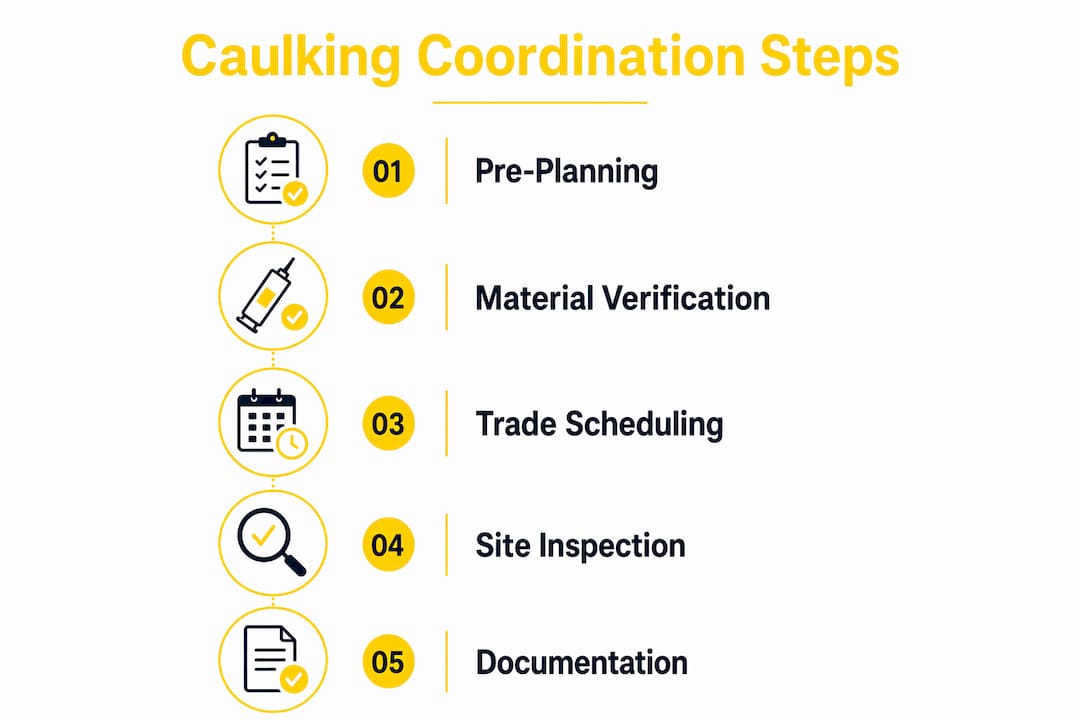
Start with written meeting notes from every pre-installation conference. Per standard joint sealant specifications, notes must record any conflicts, incompatibilities, or scope gaps identified, and copies go to all attendees before work begins. A joint sealant schedule listing location, product type, manufacturer, and colour for each application keeps the whole team aligned.
Photographic records at trade hand-offs are non-negotiable. Document critical transition zones before cladding conceals them: slab edges, roof-to-wall interfaces, penetrations, and window rough openings. Those photos resolve disputes and support warranty claims. A simple field checklist covering substrate condition, lap sequencing, primer application, and sealant profile verification closes the loop on caulking quality control measures at each stage.
Kettlecontracting brings trade-specific expertise to your site

Kettlecontracting works directly with project managers and general contractors across the Greater Toronto Area, handling the coordination work that keeps caulking from becoming a liability. From pre-construction consultation and substrate review through to final inspection and defect management, the team brings the trade-specific knowledge that generalist crews simply do not carry. Every product selection is verified for ASTM compliance, every application is sequenced to protect the air and water barrier, and every job is documented properly. Get in touch with Kettlecontracting to discuss your project before the trades start moving.
FAQ
What is the function of caulking in construction?
Caulking seals joints and gaps in the building envelope against water infiltration, air leakage, and movement between dissimilar materials. It is a structural component of the air and water-resistive barrier, not a cosmetic finish.
What is the purpose of caulking site coordination?
Site coordination aligns trade sequencing, verifies material compatibility against standards such as ASTM C1193, and ensures every penetration and transition is sealed before it is concealed by cladding or finishes.
What does a caulking site coordinator actually do?
The coordinator runs pre-construction meetings, confirms substrates are ready, manages the joint sealant schedule, documents hand-offs photographically, and communicates site readiness issues to the construction manager before they cause delays.
What is the best strategy for caulking on a construction project?
Treat the air and water-resistive barrier as a continuous line, schedule caulking after concrete curing and joint stabilisation, hold a focused field review with all affected trades early in the project, and document every critical transition before cover-up.
Key takeaways
Effective caulking site coordination requires verified material compatibility, disciplined trade sequencing, and documented hand-offs to maintain a continuous air and water-resistive barrier.
| Point | Details |
|---|---|
| Sequence before you seal | Apply sealant only after concrete has cured and joints have stabilised to prevent early failure. |
| Verify material compatibility | Test sealant chemistry against actual substrates using ASTM C1193 and ASTM C794 before full installation. |
| Document every hand-off | Photograph transition zones before cladding covers them; these records resolve warranty disputes. |
| Hold pre-construction meetings | Bring the caulking contractor, manufacturer rep, and inspector together on site to catch scope gaps early. |
| Kettlecontracting | Provides trade-specific caulking coordination for GTA project managers, from pre-construction review through final inspection. |