
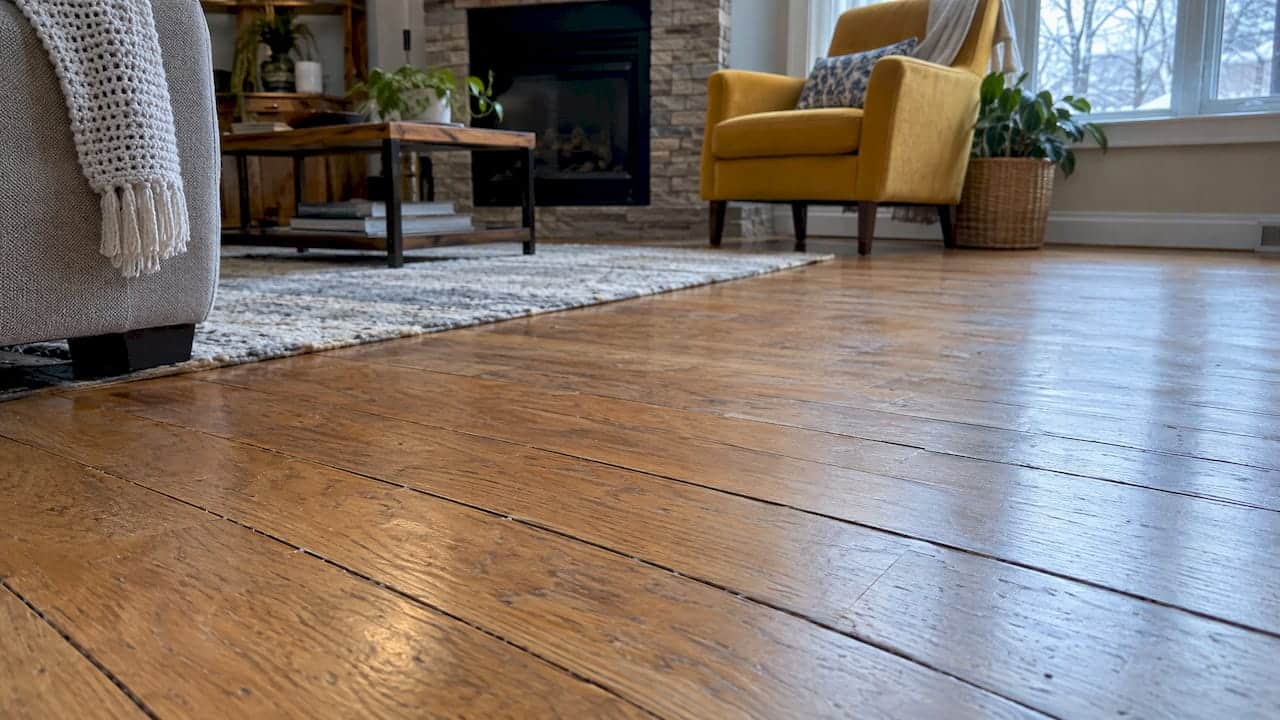
If your hardwood boards have pulled apart since the furnace came on, the cause is almost always dry indoor air, and thin gaps that come and go with the seasons are normal. The National Wood Flooring Association (NWFA) says gaps and splits are considered normal when they appear and disappear with the seasons. The fix is to manage the air in your house, not to fill the gaps. Here is how to tell normal from not normal, what to do this month, and what to leave alone.
TL;DR
- Wood gives up moisture when winter heating dries the air, so boards shrink and gaps open. Seasonal gaps that close again in humid months are normal.
- Aim for roughly 30% to 50% indoor relative humidity (RH), and watch your windows for condensation when it is very cold outside.
- Do not fill seasonal gaps with filler, rope or caulk in winter. The boards will push against it when they swell again.
- Call a professional if gaps stay open through summer, show up suddenly in one area, or come with cupping, loose boards or squeaks.
- Drafty windows, doors and trim make a house harder to humidify, so sealing them helps the whole picture.
Table of Contents
- Why hardwood floors gap in winter
- What counts as a normal gap
- The humidity range to aim for
- What to do about winter gaps
- Should you fill the gaps in winter?
- When gaps are a real problem
- Our perspective
- A simple winter routine
- Where we can help
- FAQ
- Sources
Why hardwood floors gap in winter
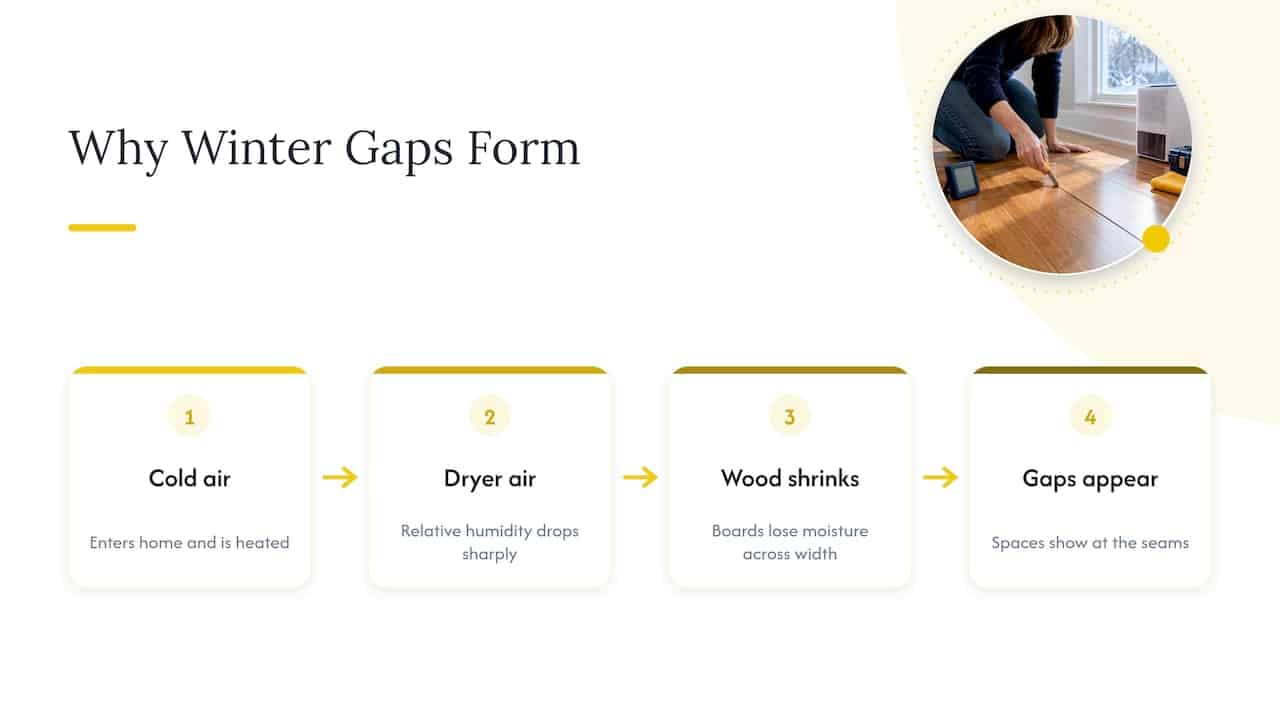
Wood is a natural material and it never stops trading moisture with the air around it. When cold outdoor air comes into your home and is heated, its relative humidity drops sharply. The wood then loses moisture to match the drier air, and each board shrinks across its width. Brett Miller, the NWFA’s vice president of education, describes this as a normal phenomenon tied directly to the drop in moisture in the surrounding air.
The gaps are tiny individually, but they add up across a room. Each board gets a bit narrower, and the space shows up at the seams.
In our climate this is more pronounced than in milder places. Ontario winters bring very cold outdoor air that holds almost no water. Heat that air to room temperature in a forced-air house with no added humidity, and it can sit well below the comfortable range for weeks. Most people never notice, because dry air doesn’t feel like much until the static shocks start.
What makes some floors gap more than others
Not every floor in the same house behaves the same way. A few things decide how big your gaps get:
- Board width. According to Hardwood Floors Magazine, an 8-inch plainsawn white oak plank will shrink twice as much as a 4-inch plank of the same cut and species in the same conditions. Wide planks mean wider gaps.
- Species and cut. Some woods move more than others, and plainsawn boards move more than quartersawn ones across the width.
- Heat sources. Rooms with a wood stove, radiant floor heating or a register right beside the floor dry out faster, so gaps tend to open there first.
- How new the house is. In a tighter, newer build, moisture from construction can be sealed in. When the house dries out over the first 6 to 12 months, the NWFA’s Brett Miller notes the flooring and subfloor shrink, and the resulting gaps may never fully close in humid months.
What counts as a normal gap
A normal winter gap is thin, fairly even, and spread across the floor. It opens as the heating season goes on and closes again over the spring and summer. If you have lived in the house for a few years and the same seams open every January, that is the floor doing what solid wood does.
The more useful question is whether the gaps close. The NWFA’s Problem Prevention guidance treats large gaps, and gaps that do not close in the more humid months, as reasons to call a professional.
A simple way to check is to take a pencil and mark a tick on each side of a few gaps in February. Check them again in July. If the marks have moved back together, the floor is moving with the seasons. If they haven’t, you have something to look at more closely.
The humidity range to aim for
The air is what you control. Two Canadian and North American sources give you the targets:
| Source | Recommended indoor RH | Notes |
|---|---|---|
| NWFA | 30% to 50% year-round | Applies to wood flooring |
| Health Canada, Healthy Home Guide | 30% to 50% | Use a humidifier or dehumidifier if necessary |
| Health Canada, Relative Humidity Indoors factsheet | 30% to 35% in winter, below 50% in summer | Warns that very cold weather limits how high you can go |
That last row matters. Health Canada’s factsheet points out that when it is very cold outside, a house may not tolerate RH above 30% without heavy condensation on the windows. It also says that RH below 30% in winter may make wood floors and furniture contract.
So in a deep cold snap, you are balancing two things: enough humidity to protect the floor, and not so much that your windows run with water. Condensation on the glass is your signal to back off.
How to measure it
Buy a digital hygrometer. They are inexpensive and they take the guessing out of it. Place it in the room with the floor, away from registers and exterior walls, so it reads the air the boards actually sit in. Check it a couple of times a week through the heating season.
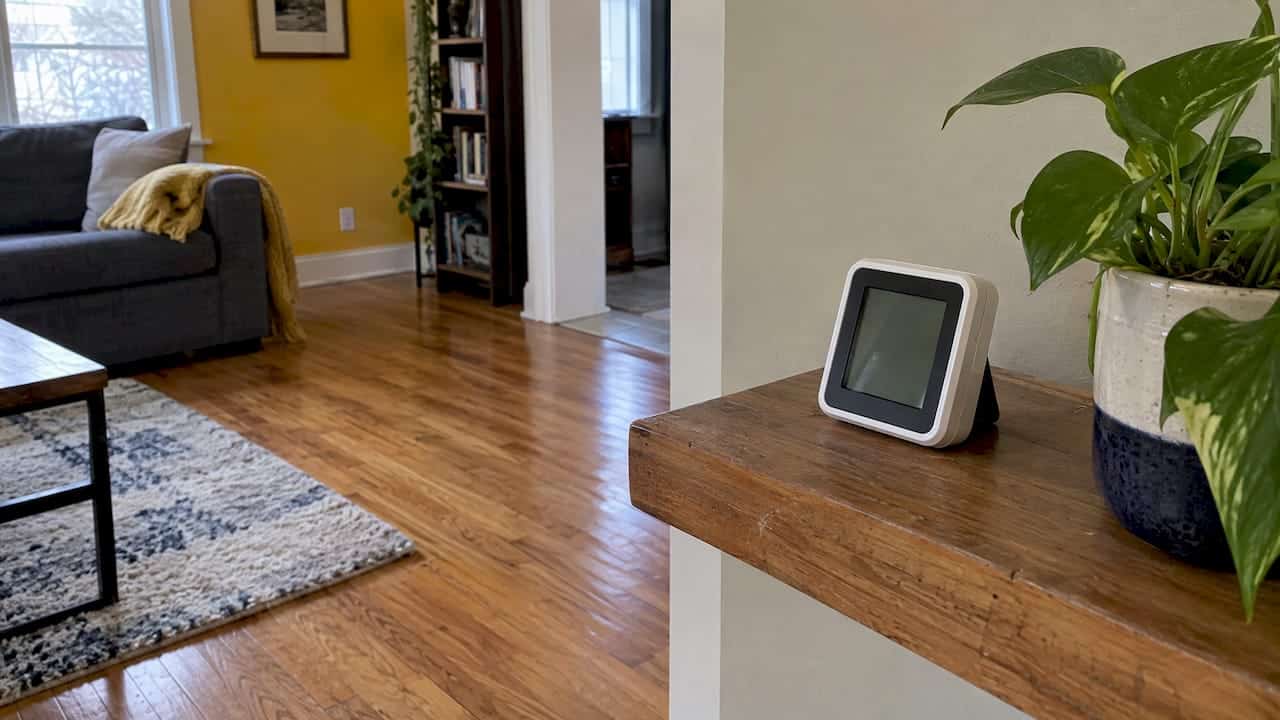
If the reading sits in the low 20s or teens through January, your gaps are telling you the same thing the hygrometer is.
What to do about winter gaps
Add moisture to the air, gradually
If your RH is low, humidify. A humidifier built into the furnace covers the whole house. Portable units work for a smaller home, an apartment, or a single problem room. Start before the boards have already given up their moisture, which means turning it on in the fall rather than waiting for the first gap to appear.
Make changes gradually. Wood needs time to pick up moisture again, so gaps won’t close the day the humidifier starts. Think weeks, not hours.
If you have in-floor radiant heat, bring it up slowly at the start of the season rather than cranking it. Sudden heat swings are hard on boards.
Cut down on what dries the house out
Every bit of cold air that gets into your home and warms up comes in extremely dry. That is where your moisture goes. Air leaks around windows, doors and trim make the problem worse, because the more outside air you pull through the house, the more moisture you have to add to keep up.
This is where our trade comes in. Worn exterior caulking around windows and door frames is one of the most common leak paths we see on Durham Region homes. If you want to understand how it fails, we’ve written about how freeze-thaw damages caulk and about warning signs of bad door caulking. Sealing those gaps won’t replace a humidifier, but it takes load off it.
Check your heating and ventilation system
Humidity control is partly an HVAC job. If you want a plain-language explanation of how the two connect, this piece on humidity in your HVAC system covers what homeowners should know about monitoring and maintaining it. Whoever services your furnace can also tell you whether a whole-home humidifier suits your system.
Ease off other stressors
A few habits make a dry floor worse:
- Turning the thermostat up and down in big jumps.
- Parking a space heater next to the floor for hours.
- Letting the house sit unheated for long stretches, then blasting it.
- Wetting the floor to “help” it. Excess water does harm. Moisture needs to come from the air, not from a mop.
Should you fill the gaps in winter?
No. This is the mistake we see most, and it is understandable. A gap looks like something you should fix, so you reach for filler.
Here is the problem. The gap is open because the boards are at their smallest. When humid weather returns, they swell. If there is filler in the seams, the boards have nowhere to go. Hardwood Floors Magazine warns that filling seasonal gaps while the floor is dry may permanently damage the flooring, because the filler can crush the wood fibres along the board edges. Its advice is to wait for the humid season or introduce humidity instead.
Rigid putty cracks and pops out. Rope or caulk can get pushed up or can split an edge. You end up with a worse floor than the one you started with.
When repairs make sense
If you still have gaps after a full humid season, with the house kept in range, then a repair may be worth it. Do it in a moderate-humidity month, not in the dead of winter. The NWFA’s own guidance for seasonal repairs is to do them during months of moderate humidity so you don’t create new gaps or add to the damage to the wood cells. Which method suits depends on the width of the gap, and that is a flooring professional’s call. Ask them to assess the floor first and not simply fill it.
When gaps are a real problem
Most winter gaps are harmless. These are not:
- Gaps that stay open all year, including through a humid summer.
- Gaps wide enough to catch a fingernail deeply or collect debris.
- Gaps concentrated in one room or along one wall.
- Sudden gaps in one area, particularly alongside cupping, loose boards, squeaks or uneven boards.
- Several boards moving together, leaving one large gap.
These point to something beyond normal seasonal movement: fastening, subfloor moisture, how the floor was acclimated before install, or a local heat source. A flooring professional can take moisture readings of the boards and subfloor before recommending anything.
If the boards have cupped or you see staining, moisture coming from somewhere else is the concern. How water gets into a house matters here, and our guide on how moisture enters home walls explains the common routes.
What about winter creaking?
Floors often creak more in winter for the same reason they gap. As boards shrink, they can lose some of their snug contact with each other and with the fasteners below, so movement produces sound. Occasional winter squeaks that fade when humidity returns are usually seasonal. Squeaks that arrive with loose or uneven boards are worth having someone look at.
Our perspective
After 25 years of working on homes in Oshawa, Whitby, Ajax and across Durham Region, I can tell you the floor is rarely where the problem starts. When a homeowner calls about gaps, drafts or a house that never feels right in January, I look at the whole envelope.
Here is what I’ve seen. A house with failing caulking around its windows and doors loses heat and gains dry air at the same time. The furnace runs harder, the air gets drier, and the boards give up their moisture. A humidifier fights that, but if the leaks stay, you are bailing out a boat with a hole in it.
We do not fill hardwood gaps, and we would tell you not to either. That is a flooring matter, and the right answer is patience and humidity control. What we do is the part that sits in our trade: sealing windows, doors, trim and exterior joints properly so they hold through Ontario’s freeze-thaw cycles, not for one season. We use materials suited to the Canadian climate, and we aim to do it right the first time.
If your floor has gaps and your windows also show cracked, shrunken or missing caulking, it makes sense to fix both. Seal the leaks, add humidity, and give the floor a full season to show you what it does.
Felix
A simple winter routine
Here is a practical routine for a typical Ontario home with solid hardwood:
- Late October to early November: buy or check your hygrometer. Set up or turn on the humidifier before the heating season is in full swing.
- Through the winter: read the hygrometer a couple of times a week. Aim for the 30% to 50% range, staying toward the lower half in a hard cold snap, and watch the windows for condensation.
- Walk the house for drafts: feel around windows and exterior doors on a cold, windy day. Note any cracked or pulled-away caulk.
- February: mark a few gaps with a pencil if you want to track them.
- Spring: book exterior caulking and any other sealing work once temperatures allow it.
- July: check your pencil marks. If gaps have closed, leave them alone. If they haven’t, get a flooring professional to assess.
One more point on timing: the same dryness that opens gaps can also cause small surface checks if humidity drops quickly and stays low. Keeping RH steady matters more than hitting one perfect number.
Where we can help
We handle the building envelope side of a drafty, dry house. That includes residential window caulking, door caulking and weather sealing, and full building envelope sealing for larger properties. For properties where winter sealing is a priority, our guide to door caulking for extreme weather explains what we look at.
We also offer tile and flooring, window and door installation, and other interior work. You can see the full range on our services page.

If you want an honest look at where your home is leaking, get in touch through kettlecontracting.com. We will tell you what needs doing and what doesn’t.
FAQ
Are hardwood floor gaps in winter normal?
Yes, thin gaps that open in winter and close again in humid months are normal for solid hardwood. The NWFA considers them normal when they appear and disappear with the seasons. Gaps that stay open through summer, or that are wide and uneven, deserve a professional’s look.
What humidity should I keep my home at in winter?
The NWFA recommends 30% to 50% relative humidity year-round, and Health Canada’s guide gives the same range for homes. In very cold weather, Health Canada notes a house may not tolerate more than about 30% without condensation on windows, so adjust to what your windows tell you.
Can I fill the gaps in my hardwood floor?
Not in winter. Filling gaps while the boards are shrunk means the filler gets squeezed when they swell again, which can crush the board edges. Wait for a moderate-humidity month and have the floor assessed before any repair.
How long does it take for gaps to close?
Wood picks up moisture slowly, so expect weeks after you raise humidity, not days. Many gaps then close further as the humid season arrives. If they are still open after a full summer, have a flooring professional check the floor and subfloor.
Do hardwood floors creak more in winter?
Often, yes. Drier air shrinks the boards slightly, and that can loosen their contact with each other and the fasteners. Seasonal creaks that ease when humidity returns are usually normal. Creaking with loose or uneven boards is worth an assessment.
Sources
- NWFA: Avoiding Winter Weather Woes
- NWFA: Problem Prevention
- Hardwood Floors Magazine: ‘Tis the Season, Understanding Seasonal Related Issues
- Health Canada: Healthy Home Guide
- Health Canada: Relative Humidity Indoors Factsheet