
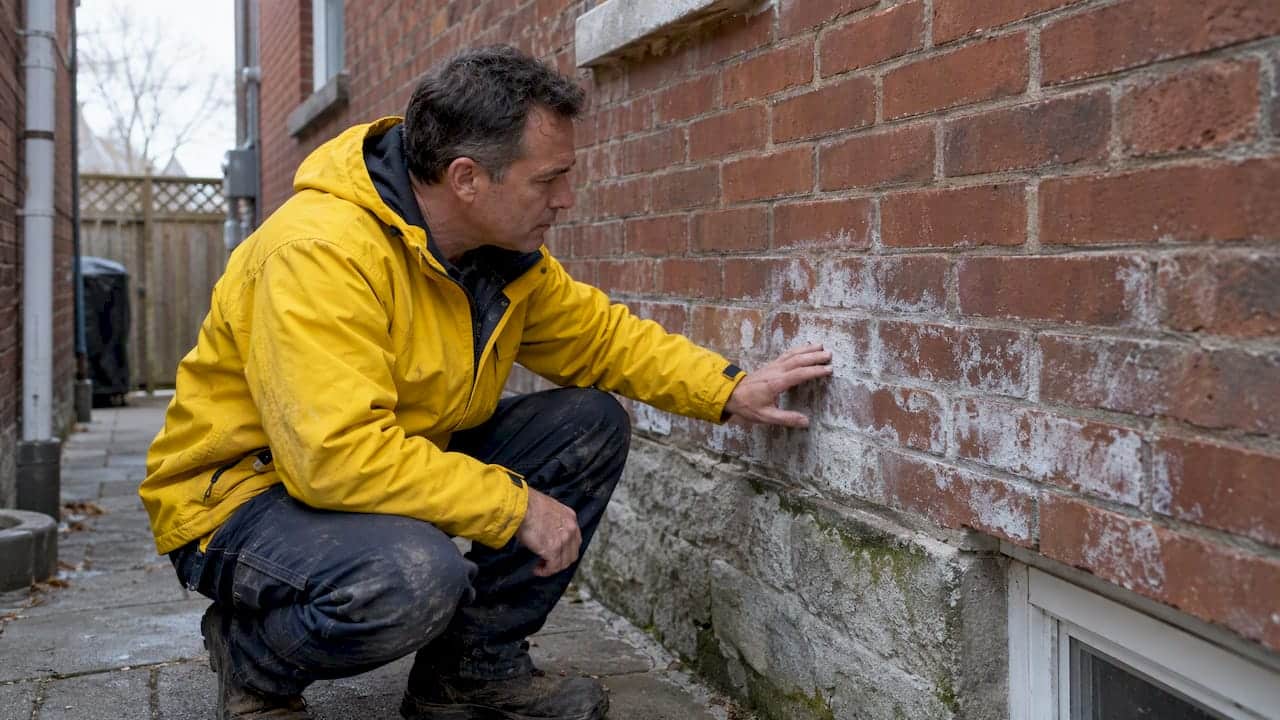
The safest first move is to dry-brush loose salts off the surface, then stop the water that is feeding them before you clean anything else. Light cases often clear with a stiff brush and plain water. Stubborn deposits may call for a proprietary cleaner or a diluted acid, but only after a small test patch, and only once the moisture source behind the staining has been found and fixed.
TL;DR:
- A dry, powdery white or gray bloom that brushes off and temporarily disappears when wet usually indicates efflorescence; green staining needs specialist treatment.
- A temporary mortar salt bloom can appear on new construction; let it weather naturally for about a year, because cleaning wet masonry can drive salts deeper.
- After dry brushing and water scrubbing, test any cleaner on a hidden patch, wait 3 to 7 days, and avoid pressure washing or sandblasting.
- Use diluted acid as a last resort, applying a 2% to 10% solution to wetted masonry in 4 square foot sections and rinsing within 5 minutes.
- Bring in a masonry professional when deposits return repeatedly, mortar crumbles, or brick is old or soft fired; ask for moisture testing and a trial patch.
Table of Contents
- How do you know it’s efflorescence and not something else?
- Why does efflorescence form, and how long does it take to go away?
- How do you safely remove efflorescence step by step?
- When should you bring in a professional instead?
- What stops efflorescence from coming back for good?
- What 25 years of caulking jobs has taught me about efflorescence
- How we help stop efflorescence at the source
- FAQ
- Sources
How do you know it’s efflorescence and not something else?
Efflorescence shows up as a powdery, white to greyish bloom sitting on top of brick, block or concrete. It wipes or brushes off fairly easily when dry, which is the quickest way to rule out paint failure or a surface coating problem.
A few checks help confirm what you’re dealing with:
- Dry-brush test: a stiff brush should lift true efflorescence off easily; if it smears or won’t budge, you may be looking at paint, rust, or mildew instead.
- Water-wipe test: wet the area; efflorescence often temporarily disappears or darkens, then returns as the surface dries.
- Colour check: white or grey bloom is typical calcium carbonate or sulphate salt; green staining points to vanadium salts, which don’t respond to ordinary washing and need a specialist.
- Repeat pattern: if the bloom comes back within weeks of cleaning, you’re not dealing with leftover construction salts, you’ve got an active moisture problem.
If the stain doesn’t match any of these behaviours, or the salt composition is unclear, a lab test using methods like X-ray diffraction can confirm exactly what you’re working with, according to GoBrick’s technical notes on efflorescence.
Why does efflorescence form, and how long does it take to go away?
Efflorescence is the result of water-soluble salts travelling through masonry and crystallizing on the surface once the moisture evaporates, according to the National Research Council’s publication archive. It’s a symptom of moisture movement, not a disease on its own.
Common culprits around a typical property include:
- Failed or missing caulking around windows and doors, letting rain track behind the brick veneer.
- Damaged or poorly lapped flashing above windows, doors, and parapets.
- Grading that slopes toward the foundation instead of away from it.
- Sprinklers or downspouts discharging water directly against the wall.
New construction often shows a one-time bloom as residual mortar salts work their way out. GoBrick’s guidance suggests letting that weather away naturally over about a year rather than rushing to clean it, since cleaning wet masonry can push the problem deeper instead of solving it.
How do you safely remove efflorescence step by step?
Work through these steps in order, and don’t skip ahead because a step looks slow:
- Dry-brush the surface with a stiff fibre brush to remove loose, powdery salt crystals. Do this before introducing any water.
- Scrub with clean water and the same stiff brush, ideally in warm, dry weather so the wall can dry out between applications.
- Try vinegar or a proprietary masonry cleaner for deposits that resist plain water. Apply per the product label, then rinse thoroughly.
- Test a small, inconspicuous patch first, wait 3 to 7 days, and check the result before treating the whole wall, as both CMHC and GoBrick advise.
- Work in small sections and rinse immediately.
Skip high-pressure washing and sandblasting entirely. Abrasive methods strip the hard fired face off brick, exposing softer material underneath that weathers faster and absorbs more water going forward, a point Hamilton’s masonry restoration guidelines make clearly for heritage and modern masonry alike. If you’re already planning exterior cleaning ahead of painting, our partners at Sigma Painting cover pressure-washing cautions worth reading before you turn on a washer near brick.
When should you bring in a professional instead?
Some situations are beyond a weekend DIY job. Watch for these red flags:
- Efflorescence that returns again and again after proper cleaning.
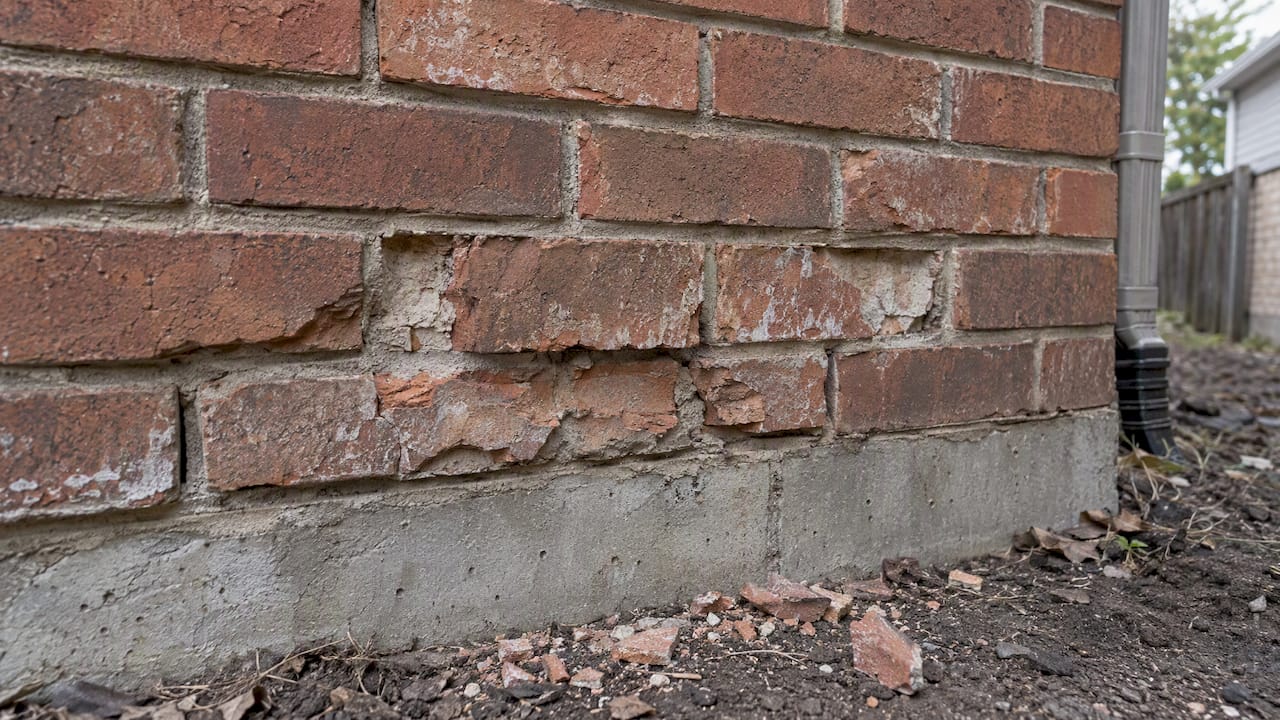
- Mortar that’s crumbling, soft, or pulling away from the joint.
- Green staining, which signals vanadium salts rather than ordinary efflorescence.
- Older or soft-fired brick, which can be permanently damaged by the wrong cleaning method.
A proper inspection traces the moisture source using simple tools like moisture meters and hose tests, checks flashing laps and caulking condition, and runs a small trial-clean patch before committing to a method, following the same approach GoBrick recommends for assessment. From there, mortar repair or expansion joint resealing addresses the actual cause instead of just the symptom.
Before hiring anyone, ask about insurance, references, and whether they’ll run a test patch before full-scale cleaning. If salt action has already caused brick to flake or pop, that’s a separate repair, something we cover in our guide to spalling brick repair.
Pro Tip: Ask any contractor what moisture source they found before they tell you how they plan to clean the wall. If they skip straight to the cleaning method, keep looking.
What stops efflorescence from coming back for good?
Cleaning without fixing the water source just buys you a few months before the bloom returns. Durable fixes focus on keeping water out in the first place:
- Clean gutters and route downspouts well away from the foundation.
- Grade soil so it slopes away from walls, not toward them.
- Check flashing above windows, doors, and parapets for proper slope and lap, and repair gaps.
- Move sprinkler heads so they don’t spray directly onto brick or siding.
- Reseal expansion joints with sealant chemistry rated for freeze-thaw movement, since a joint that cracks each winter reopens the same moisture path every spring.
Coatings are not a shortcut here. Sealing an actively damp wall with a non-breathable coating can trap moisture below the surface, leading to subflorescence or cryptoflorescence, crystallization that happens beneath the surface and can cause spalling, according to NRC’s technical note on coatings. A vapour-permeable water repellent can fit once the wall is confirmed dry, but it’s never a substitute for fixing the leak.
A quick seasonal check goes a long way: walk the perimeter each spring and fall. Look at caulking joints for cracking or separation, and check that flashing hasn’t shifted over winter.
What 25 years of caulking jobs has taught me about efflorescence
Most calls I get about white staining aren’t really about the staining, they’re about a leak nobody’s found yet. The biggest mistake I see is homeowners reaching for muriatic acid before checking a single flashing or caulk joint. Test a small patch, give the wall time to dry between steps, and fix the water path before you touch a brush to the wall. The cleaning is the easy part.
— Felix
How we help stop efflorescence at the source
When the cause is failed caulking, cracked expansion joints, or gaps in flashing, cleaning the stain won’t keep it from coming back. We diagnose where water is getting in and repair it properly, whether that’s resealing brick expansion joints built to handle Ontario’s freeze-thaw cycles or addressing the wall as a whole through building envelope sealing.

A typical visit includes:
- An inspection of caulking, flashing, and joints around the affected area.
- A test patch to confirm the right repair approach before full-scale work.
- A clear scope and estimate before anything gets started.
If efflorescence keeps showing up on your property, book an inspection through our building envelope sealing page and we’ll find out what’s really going on behind the wall.
FAQ
Can efflorescence be removed permanently?
Efflorescence itself can be fully removed from the surface, but it won’t stay gone unless the moisture source behind it is fixed. Addressing failed caulking, flashing, or drainage issues first is what prevents it from returning, according to CanadaBrick’s technical guidance.
What is the best way to remove efflorescence from concrete?
Start with dry brushing to remove loose salt crystals, then scrub with clean water and a stiff fibre brush. For stubborn deposits, a diluted acid solution can be used as a last resort, following the test-patch and rinsing guidance from CMHC’s brick cleaning note.
How can I remove efflorescence from brickwork?
The same sequence applies to brick: dry brush first, then water and a stiff brush, moving to a proprietary cleaner or diluted acid only if needed. Always test a small area and wait a few days before judging the result, since cleaning before the masonry has fully dried can make staining worse.
Can I use CLR to remove efflorescence?
Household cleaners like CLR are not part of the technical guidance for masonry cleaning and can react unpredictably with mortar and brick. A proprietary masonry cleaner or properly diluted acid, applied with a test patch first, is the better-documented approach.
Sources
For readers who want the underlying technical detail, the sources below cover diagnosis, cleaning procedures, and prevention in more depth than a blog post can.
- Cleaning brickwork (GoBrick technical note)
- Efflorescence – Causes and Prevention (GoBrick Technical Note 23A)